TL;DR
A holographic sight manufacturer designs, engineers, and produces the optics, laser diodes, and reticle systems that make holographic weapon sights work accurately under real-world conditions. Quality varies widely between manufacturers, and factors like laser diode grade, housing durability, battery efficiency, and testing standards separate reliable brands from unreliable ones. Choosing the right holographic sight manufacturer means looking past marketing claims and focusing on build quality, certifications, and how the product performs after repeated use in the field.
Quick Answer
A holographic sight manufacturer is a company that engineers and produces holographic weapon sights, which use a laser diode and a holographic reticle image to help shooters aim without needing perfect eye alignment behind the sight. The manufacturer’s choices around laser quality, internal optics, waterproofing, and battery life directly determine how well the sight performs in recoil-heavy, low-light, or extreme-weather conditions. Because holographic sights rely on precise internal alignment, the manufacturing process itself has a bigger impact on reliability than most buyers realize.
Introduction
Holographic sights have become a common sight, no pun intended, on rifles used by hunters, competitive shooters, and professionals in tactical roles. Unlike a traditional red dot sight, a holographic sight uses a laser to project a holographic image of a reticle onto a glass window, which creates a different viewing experience and a different set of engineering challenges.
Behind every one of these sights sits a holographic sight manufacturer responsible for getting dozens of small details right. The laser diode has to be calibrated precisely. The internal optics have to survive recoil without shifting. The housing has to seal out moisture and dust while staying light enough to mount comfortably.
Most buyers never think about who actually built the sight they’re relying on. This article looks at what a holographic sight manufacturer actually does, how the manufacturing process shapes real-world performance, and what separates a dependable manufacturer from one that only looks good on a spec sheet.
What a Holographic Sight Manufacturer Actually Builds
A holographic sight manufacturer isn’t simply assembling a red dot with a different name. The internal design of a holographic sight is fundamentally different from a standard reflex sight, and that difference starts with how the reticle image is created.
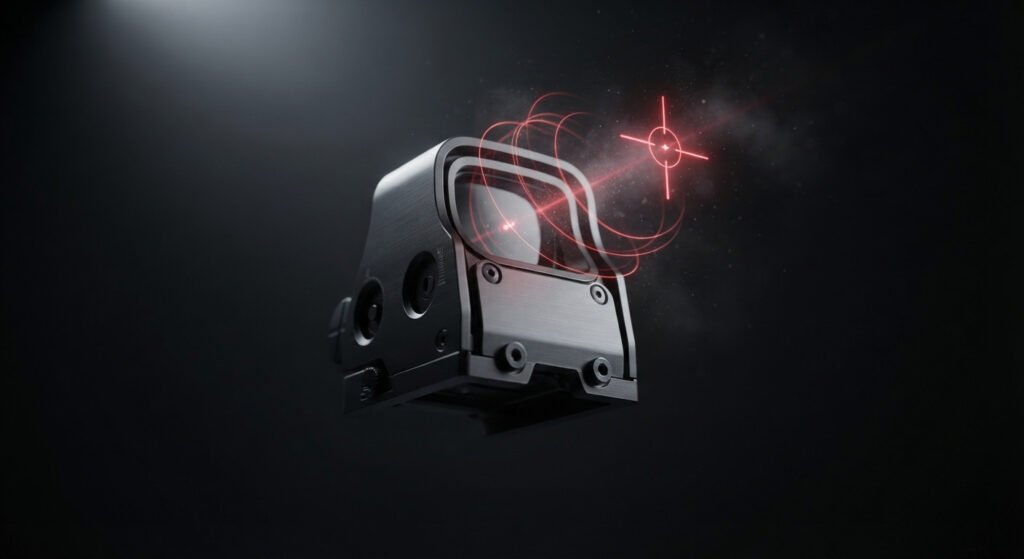
Instead of shining an LED directly onto a lens like a reflex sight does, a holographic sight uses a laser diode to illuminate a small holographic film or grating inside the unit. That film contains a recorded interference pattern, which is essentially a stored image of the reticle. When laser light passes through it, the reticle appears to float in space in front of the shooter’s eye.
This process requires far more precision than building a basic reflex sight. A holographic sight manufacturer has to align the laser, the holographic element, and the viewing window to extremely tight tolerances, because even a small misalignment can distort the reticle or cause a noticeable point-of-impact shift.
Why the Manufacturing Process Matters More Than the Marketing
Two holographic sights can look nearly identical from the outside and still perform very differently once mounted on a firearm. The difference usually comes down to internal build quality, something a spec sheet rarely communicates clearly.
A well-run holographic sight manufacturer tests units for reticle stability under recoil, checks battery consumption across a range of brightness settings, and verifies that the housing holds zero after repeated impacts. A manufacturer cutting corners may skip several of these steps, and the difference often doesn’t show up until the sight has already been through a few hundred rounds.
How Holographic Sights Differ From Red Dot Sights
Buyers often use “holographic sight” and “red dot sight” interchangeably, but the technology behind each is genuinely different, and this affects what a holographic sight manufacturer has to prioritize during design.
A red dot sight projects an LED point of light onto a coated lens, and the shooter sees that reflected dot as the aiming point. A holographic sight instead projects a full reticle pattern using laser diffraction, which means the reticle can include more detail, such as range-estimating brackets or multiple aiming points, without losing clarity.
This added complexity means a holographic sight manufacturer has to manage more variables during production. The laser diode must maintain consistent output over its lifespan, the holographic element must resist degradation from heat and humidity, and the electronics need to regulate power carefully since holographic sights typically draw more battery power than simple red dots.
Parallax and Eye Relief Considerations
One advantage often associated with holographic sights is reduced parallax sensitivity compared to some reflex sights, meaning the reticle stays more accurately placed on target even if the shooter’s eye isn’t perfectly centered behind the sight. Achieving this benefit consistently depends heavily on how precisely a holographic sight manufacturer aligns the internal optical path during assembly.
Eye relief, meanwhile, tends to be shorter on many holographic sights compared to some magnified optics, which is generally intentional given their typical use case on carbines and shotguns at closer engagement distances. A manufacturer’s housing design and mounting height directly affect how comfortable that eye relief feels in practice.
Materials and Components That Affect Long-Term Reliability
The materials a holographic sight manufacturer chooses for the housing, lens, and internal components have a direct effect on how the sight holds up over years of use, not just its initial performance out of the box.
Housings are typically made from aluminum alloys, and the grade of aluminum used affects both weight and impact resistance. A thicker, higher-grade housing adds some weight but generally survives drops and rough handling better than a thinner, lighter-weight alternative.
The viewing window, often treated with anti-reflective and scratch-resistant coatings, needs to maintain optical clarity across a wide temperature range. A manufacturer that skips a durable coating may produce a sight that looks fine in a showroom but scratches or fogs after outdoor use.
Waterproofing and sealing quality also vary significantly between manufacturers. Many holographic sights carry an ingress protection rating, and buyers should confirm what testing standard that rating is actually based on rather than assuming all ratings mean the same level of protection.
Battery Systems and Power Management
Because holographic sights rely on a continuously active laser diode rather than a simple LED, battery efficiency is a bigger engineering concern for a holographic sight manufacturer than it is for most reflex sight producers.
Some manufacturers design their electronics to draw significantly less power at lower brightness settings, extending battery life considerably compared to sights that don’t manage power as efficiently. This difference matters most to hunters and long-term users who may not check or replace batteries often, since an unexpected power failure in the field defeats the purpose of the sight entirely.
Quality Standards and Testing That Separate Manufacturers
Not every holographic sight manufacturer tests products the same way, and this is where the real differences in reliability tend to show up.
Reputable manufacturers typically run their sights through recoil testing on various calibers, drop testing from set heights, temperature cycling to simulate extreme hot and cold conditions, and submersion testing if a waterproof rating is claimed. These tests help confirm the sight will maintain zero and continue functioning after the kind of abuse it’s likely to encounter in actual use.
Some manufacturers also pursue military or law enforcement contracts, which typically require passing additional standardized testing protocols. A sight that has passed this kind of formal testing generally offers more assurance of consistent quality than one marketed purely toward the civilian hunting or sport shooting market without any third-party verification.
It’s worth noting that passing internal company testing isn’t the same as passing independent, third-party certification. Buyers who want stronger assurance of quality should look for manufacturers willing to share specific test results or certifications rather than general claims of “military-grade” construction, a term that isn’t strictly regulated and can mean different things depending on the company using it.
OEM and Private Label Manufacturing in the Optics Industry
A detail many buyers don’t realize is that a fair number of holographic sights sold under different brand names actually come from a smaller number of underlying manufacturing facilities. This is common across the broader optics industry, not just holographic sights specifically.
A holographic sight manufacturer may produce a base design and then supply it to multiple retail brands, each of which applies its own branding, minor feature adjustments, and pricing strategy. This doesn’t necessarily mean the products are identical, since brands can request different components, coatings, or quality control standards even when working with the same base manufacturer.
Understanding this dynamic helps explain why two sights at very different price points sometimes share similar internal designs, while two sights from different-sounding brands occasionally come from the exact same production line. Buyers focused purely on brand name may miss more relevant differences in the specific components and testing a particular version has gone through.
Custom Reticle and Feature Development
Some holographic sight manufacturers also offer custom reticle patterns or feature sets for law enforcement agencies, military units, or large retail partners. This typically involves adjusting the holographic film’s interference pattern to produce a different reticle design, along with any firmware changes needed for features like adjustable brightness settings or motion-activated power saving.
Custom development like this requires more advanced tooling and engineering capability than simply assembling a standard product line, which is one reason not every holographic sight manufacturer offers this kind of service.
Applications Across Different User Groups
Holographic sights serve a fairly wide range of users, and a holographic sight manufacturer often designs different product lines to serve these groups with somewhat different priorities.
Military and law enforcement users typically prioritize durability, low-light performance, and reliability under sustained heavy use, since these sights may see extended service life across demanding conditions. Manufacturers targeting this market generally invest more heavily in ruggedness testing and often pursue relevant certifications to qualify for institutional contracts.
Competitive shooters, particularly in speed-shooting disciplines, tend to prioritize a wide field of view and fast target acquisition, since the reticle needs to be quickly visible when transitioning between targets. Manufacturers serving this segment often focus on reticle design and glass clarity as much as raw durability.
Hunters and civilian shooters often weigh battery life, weight, and price more heavily, since their use case typically involves fewer rounds fired but longer periods where the sight needs to hold zero and remain ready without frequent maintenance. A holographic sight manufacturer serving this market segment usually balances cost against a reasonable level of durability rather than building to the same extreme specifications required for military contracts.
How to Evaluate a Holographic Sight Manufacturer Before Buying
Rather than relying solely on brand reputation or price, there are more concrete factors worth checking when evaluating a holographic sight manufacturer.
Start by looking at how long the company has been producing optics specifically, since experience with the particular engineering challenges of holographic technology tends to show up in product consistency over time. A manufacturer with a longer track record in holographic optics specifically, rather than optics in general, has usually encountered and solved more of the common failure points.
Check what warranty is offered and how straightforward the claims process is described to be. A manufacturer confident in its own manufacturing quality generally offers a warranty that reflects that confidence, while vague or heavily conditional warranty language can be a signal worth investigating further.
Look for publicly available test data, user reviews from people who have used the sight extensively rather than only unboxing it, and any independent testing from recognized shooting publications or organizations. A single glowing review means very little, but a consistent pattern of feedback across many independent sources tends to be more reliable.
Finally, consider contacting the manufacturer directly with specific technical questions about laser diode specifications, battery life at different brightness settings, or testing standards used. How thoroughly and transparently a company answers these kinds of questions often says as much about their manufacturing standards as the answers themselves.
Common Misconceptions About Holographic Sight Manufacturing
A few misunderstandings come up repeatedly when people research holographic sight manufacturers, and clearing these up helps set more realistic expectations.
One common misconception is that all holographic sights function essentially the same way internally, when in reality the specific laser diode grade, holographic film quality, and electronics design vary considerably between manufacturers and directly affect performance and longevity.
Another misconception is that a higher price always guarantees better manufacturing quality. While there’s often some correlation, pricing also reflects brand positioning, marketing spend, and retail markup, which means price alone isn’t a reliable indicator of build quality without additional research into the specific manufacturer.
A third misconception involves battery life claims, since manufacturer-stated battery life figures are typically measured under specific, sometimes optimal, brightness settings that may not reflect how a particular shooter actually uses the sight in the field.
Conclusion
Choosing a holographic sight manufacturer isn’t just about picking a recognizable brand name or the sight with the most impressive-looking spec sheet. The internal engineering decisions a manufacturer makes, from laser diode quality to housing material to how thoroughly the product is tested, have a much bigger impact on real-world reliability than most marketing materials reveal.
Buyers who take the time to look into a manufacturer’s testing standards, warranty terms, and independent user feedback tend to end up with a sight that performs consistently long after the initial purchase. Given how much a holographic sight is relied upon in situations where accuracy genuinely matters, that extra research is generally worth the effort before committing to a purchase.
FAQs
What does a holographic sight manufacturer actually design and build?
A holographic sight manufacturer engineers the laser diode, holographic film, internal optics, housing, and electronics that together create and display a holographic reticle image for aiming purposes.
How is a holographic sight different from a standard red dot sight?
A holographic sight uses laser diffraction through a holographic film to project a detailed reticle image, while a red dot sight typically reflects a simple LED point off a coated lens, which generally results in different reticle capabilities and battery consumption between the two.
Do all holographic sights come from different manufacturing facilities?
Not necessarily. Some brands source their sights from a smaller number of underlying manufacturers and apply their own branding, component choices, and quality control standards, which is a common practice across the broader optics industry.
Why do some holographic sights cost significantly more than others?
Price differences often reflect variations in laser diode quality, testing standards, housing materials, and whether the manufacturer has pursued military or law enforcement certifications, though brand positioning and marketing also play a role in final pricing.
Is a higher ingress protection rating always better when choosing a holographic sight manufacturer’s product?
A higher rating generally indicates stronger resistance to dust and water, but it’s worth confirming which specific testing standard that rating is based on, since not all manufacturers test and report ratings using the same methodology.