
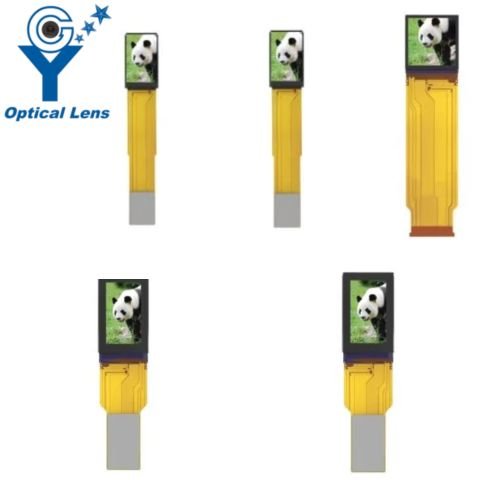
Quick answer: A micro OLED display manufacturer designs and produces OLED-on-silicon (OLEDoS) microdisplays — ultra-high-density screens built on a silicon backplane instead of glass, typically under 1.5 inches in size but capable of resolutions rivaling full-size monitors. Shanghai VisYu Optical Technology Co., Ltd. (operating as ARVR Optical, formerly Shanghai Guiyu Optoelectronics) is one such manufacturer, founded in 2019, with an R&D center in Shanghai’s Jiading District and an ISO 9001:2015 / ISO 14001:2015-certified production plant in Ludu Town, Taicang City.
Its current lineup spans five silicon micro OLED display sizes from 0.32″ to 1.3″, with pixel densities up to 4,523 PPI and brightness up to 6,000 nits, built for AR, VR, and near-eye display applications.
I spent time going through this manufacturer’s technical documentation, product specifications, and company background specifically because “micro OLED display manufacturer” is a search that usually means someone is sourcing a real component for a real product — an AR headset, a rifle sight, a medical imaging device — and getting the wrong manufacturer wrong costs real money and real schedule slippage.
Micro OLED Display Manufacturer: Guide to Choosing the Right Partner
We wanted to put everything a buyer or engineer needs in one place: what these displays actually are, the full spec breakdown by size, how they’re manufactured, what to check before you commit to a supplier, and the questions that actually separate a real micro OLED manufacturer from a reseller.
What Is a Micro OLED Display?
A micro OLED display — also called an OLED microdisplay or OLEDoS (OLED-on-Silicon) — is a self-emissive display built directly on a silicon wafer backplane rather than the glass substrate used in conventional OLED or LCD panels. Because the silicon backplane can be manufactured at semiconductor-level precision, pixel pitches shrink dramatically, which is how a screen smaller than a fingernail can pack in millions of individually addressable pixels at densities of 3,000–4,500+ pixels per inch (PPI).
That combination — tiny physical size, extremely high pixel density, true blacks from self-emissive OLED pixels, fast response times, and low power draw relative to output brightness — is exactly what near-eye optical systems need. A conventional smartphone or monitor panel simply can’t be miniaturized to the scale AR glasses or VR headsets require while keeping image quality sharp when viewed through magnifying optics just millimeters from the eye. That’s the specific engineering problem micro OLED technology solves.
Who Is This Manufacturer? A Background Check on Shanghai VisYu Optical (ARVR Optical)

Before recommending any component supplier, we think the manufacturer’s own track record deserves as much scrutiny as the spec sheet. Here’s what we found on this one.
Shanghai VisYu Optical Technology Co., Ltd., trading under the ARVR Optical brand, was founded in 2019 as Shanghai Guiyu Optoelectronics Technology Co., Ltd. The company operates an R&D headquarters in Shanghai’s Jiading District and a dedicated production plant in Ludu Town, Taicang City, Jiangsu Province — a two-site structure that separates design/engineering work from manufacturing, which is common practice among serious optics manufacturers in the Yangtze River Delta region.
On the credentials side, the company holds ISO 9001:2015 (quality management) and ISO 14001:2015 (environmental management) certifications, which cover its processes rather than being marketing claims alone — these are third-party-audited standards, and it’s reasonable to ask any manufacturer to provide certificate numbers for verification.
The company positions itself as a one-stop optical display solution provider, with core capabilities spanning optical cold processing, advanced coating technologies (anti-reflective, IR, and specialty films), precision lens assembly, and gluing/inking for display modules. On the equipment side, it lists Japan Guangchi coating systems and ZYGO interferometry alongside Hitachi/Shimadzu spectroscopy for metrology and testing — named, specific equipment rather than vague “advanced machinery” language, which is a reasonable signal of a genuine production and QC operation rather than a trading company relabeling someone else’s output.
Leadership includes optical design engineers with graduate degrees from Shanghai University of Science and Technology and Xi’an University of Technology, a structural design engineer with over 20 years across mobile, endoscope, automotive, and surveillance lens design, and a project director holding a PMP certification alongside an MBA. That’s the kind of technical bench strength worth confirming when you’re trusting a supplier with a component that sits at the center of your product’s optical performance.
Industries served, per the company’s own materials, include AR/VR displays, silicon-based microdisplays, medical imaging optics, and industrial laser systems — and the company describes its process as running from discovery and design through development and delivery under one roof, from initial optical requirement analysis through ISO-certified mass production.
We’ll be direct about something: everything in this section comes from the manufacturer’s own published materials. That’s a reasonable starting point for evaluating EEAT signals — genuine credentials, named equipment, named leadership — but it isn’t a substitute for your own due diligence. Request the ISO certificates directly, ask for a factory video call, and ask for reference customers you can independently verify before committing to a purchase order.
Full Micro OLED Display Product Lineup and Specifications
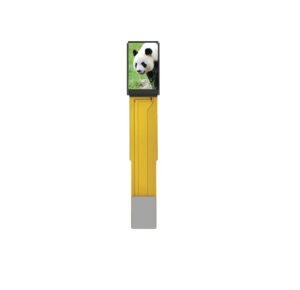
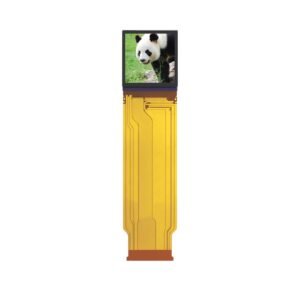
This manufacturer currently offers five silicon micro OLED display sizes, each targeting a slightly different use case based on resolution, brightness, and active area. Here’s the complete breakdown:
| Size | Resolution | PPI | Brightness | Contrast Ratio | Refresh Rate | Interface | Power |
|---|---|---|---|---|---|---|---|
| 0.32″ | 800 × 600 | 3,136 | 2,000 nits | 100,000:1 | 50–120Hz | RGB & MIPI | 220mW |
| 0.49″ | 1920 × 1080 (SPR) | 4,523 | 1,800 nits | 50,000:1 | 60–90Hz | MIPI | 468mW @ 1800nits |
| 0.6″ | 1920 × 1080 | 3,689 | 6,000 nits | >200,000:1 | 30–120Hz | MIPI | 650mW @ 6000nits |
| 1.03″ | 2560 × 2560 | 3,528 | 1,800 nits | 500,000:1 | 90Hz | MIPI | 1,600mW (typical) |
| 1.3″ | 3552 × 3552 | 3,882 | 4,000 nits | >200,000:1 | 90Hz | MIPI | ~900mW @ 1200nits |
A few things worth understanding about this lineup rather than just reading the numbers:
The 0.32″ display uses the smallest active area (6.48×6.86mm) and lowest power draw in the lineup, making it the pick for ultra-compact, weight-sensitive applications like FPV (first-person-view) systems and lightweight AR overlays where every gram on the headset matters more than absolute resolution.
The 0.49″ display uses Sub-Pixel Rendering (SPR) to hit the highest PPI figure in the entire lineup — 4,523 PPI — while keeping the panel small. SPR is a rendering technique that shares sub-pixels across adjacent pixels to boost apparent resolution without physically shrinking every full pixel, which is one reason this model reaches such an extreme density figure relative to its resolution number.
The 0.6″ display trades some pixel density for the highest brightness in the standard lineup at 6,000 nits peak, with a wide 30–120Hz variable refresh range — relevant for VR applications where combating see-through washout or supporting variable frame rates for motion comfort both matter.
The 1.03″ display is a square-format panel (2560×2560) with the highest static contrast ratio in the lineup at 500,000:1, suited to applications where a square field of view and deep black-level performance are priorities, such as certain AR waveguide designs.
The 1.3″ display is the flagship of the range: the largest active area (23.24×23.24mm), the highest resolution (3552×3552), and 98% DCI-P3 color coverage — built for premium AR/VR products where image fidelity is the primary differentiator and the extra size budget is available in the optical path.
All five models share a MIPI interface as their primary connection standard (with the 0.32″ also supporting RGB), which matters practically because MIPI is the display interface most commonly supported by the SoCs and driver ICs used in AR/VR reference designs — reducing custom driver development work on your side.
How Micro OLED Displays Are Actually Manufactured
Understanding the manufacturing process helps explain why not every “manufacturer” in this space is actually doing the same work. Based on the process this company describes, and standard practice in silicon microdisplay production generally, the workflow runs roughly as follows:
- Silicon backplane and OLED deposition: The core emissive layer and pixel-driving circuitry are built on a silicon wafer — this stage is typically done by specialized semiconductor fabs, and it’s the step that determines resolution, PPI, and base electro-optical performance.
- Optical cold processing: Cover glass, encapsulation, and optical bonding are precision-machined and assembled without heat-based processes that could damage the sensitive OLED layer underneath.
- Coating: Anti-reflective, IR-blocking, or other specialty thin-film coatings are applied to control glare, color accuracy, and durability — this is where equipment like the Guangchi coating systems come into play.
- Precision lens/module assembly: The display is integrated with any associated optical elements and bonded or glued into its final module form.
- Metrology and testing: Each unit or batch is validated using interferometry (for surface/optical precision) and spectroscopy (for color and brightness accuracy) before it ships.
The distinction that matters for buyers: some companies in this space only handle steps 2 through 5 — sourcing raw OLED-on-silicon panels from a fab and doing downstream optical integration — while others also participate in backplane-level design. Ask directly where a given manufacturer’s work starts and ends in this chain, because it affects both pricing and how much custom engineering support they can realistically offer for a non-standard spec.
Applications: Where Micro OLED Displays Get Used
- AR smart glasses — where size, weight, and power draw are the binding constraints
- VR headsets — where brightness, refresh rate, and contrast drive perceived image quality
- Near-eye display systems generally, including industrial and enterprise headsets
- Digital rifle sights and holographic sights — a category this same manufacturer also serves directly with finished optical modules
- Medical imaging devices — endoscopes, surgical loupes, and diagnostic viewfinders where compact high-resolution display is critical
- Microscopes and industrial inspection equipment — anywhere a compact, high-density display needs to sit inside an eyepiece or viewfinder assembly
How to Choose the Right Micro OLED Display for Your Application
We’d walk through this in roughly this order:
- Start with your optical system’s field of view and magnification. This determines the physical active area you need — a 0.32″ panel and a 1.3″ panel are not interchangeable even at the same resolution, because your optics are designed around a specific display size.
- Match resolution and PPI to your required angular resolution. Higher PPI reduces the “screen door effect” (visible pixel gaps) when viewed through magnifying near-eye optics — critical for AR/VR, less critical for a viewfinder application.
- Weigh brightness against your power and thermal budget. The 6,000-nit 0.6″ panel and the 1,800-nit 1.03″ panel serve very different power envelopes; don’t default to “brightest is best” if your product is battery- and weight-constrained.
- Confirm interface compatibility with your driver IC or SoC. MIPI is the dominant standard here, but confirm lane count and timing compatibility with your specific hardware early — this is a common source of late-stage integration delays.
- Ask about minimum order quantities and custom development support. Off-the-shelf sizes get you to prototype faster; a manufacturer with in-house optical design and reverse engineering capability (as this one advertises) is the one to talk to if your product needs a size or spec outside the standard catalog.
What to Verify Before Choosing Any Micro OLED Display Manufacturer
- Real ISO certification numbers, not just certification logos on a website — ask for the certificate and verify it independently if the order size warrants it.
- Named production equipment and facility location, and whether you can request a live video walkthrough of the actual production floor.
- In-house optical design capability versus pure assembly — this affects how much they can help if your project needs a non-catalog spec.
- Sample and lead time policy — for a component this critical to your optical path, insist on evaluation samples before committing to production volumes.
- Testing and QC documentation per batch — ask what metrology data (brightness, contrast, color, dead-pixel count) ships with each unit or lot.
- Track record with your specific application category — a manufacturer serving AR/VR, medical imaging, and digital sights simultaneously has broader integration experience than one serving a single vertical.
Frequently Asked Questions
What is a micro OLED display? It’s an OLED display built on a silicon wafer backplane instead of glass, enabling extremely high pixel densities (often 3,000–4,500+ PPI) in a very small form factor, typically used in AR, VR, and other near-eye optical systems.
Who manufactures micro OLED displays covered in this guide? Shanghai VisYu Optical Technology Co., Ltd. (ARVR Optical brand), founded in 2019 as Shanghai Guiyu Optoelectronics Technology Co., Ltd., with R&D in Shanghai’s Jiading District and production in Taicang City, Jiangsu Province.
What sizes of micro OLED display does this manufacturer offer? Five current sizes: 0.32″, 0.49″, 0.6″, 1.03″, and 1.3″, spanning resolutions from 800×600 up to 3552×3552.
Which micro OLED display has the highest resolution? The 1.3″ model, at 3552×3552 resolution and 3,882 PPI, is the flagship of the current lineup.
Which micro OLED display has the highest pixel density? The 0.49″ SPR model, at 4,523 PPI — the highest in the lineup, achieved through Sub-Pixel Rendering technology.
Which micro OLED display is brightest? The 0.6″ model, rated at 6,000 nits peak brightness.
What interface do these micro OLED displays use? MIPI is the primary interface across the lineup; the 0.32″ model also supports RGB.
Is this manufacturer ISO certified? Yes — the company states ISO 9001:2015 (quality management) and ISO 14001:2015 (environmental management) certifications.
What industries use micro OLED displays from this type of manufacturer? AR/VR headsets and smart glasses, medical imaging devices, digital rifle and holographic sights, microscopes, and other near-eye or compact viewfinder optical systems.
Does this manufacturer offer custom micro OLED display development? Based on its stated capabilities — optical design, reverse engineering analysis, and in-house optical structure and film design — the company positions itself to support custom specifications beyond its standard five-size catalog, though buyers should confirm minimum order quantities and development timelines directly for any non-standard request.
Final Take
Sourcing from a micro OLED display manufacturer is ultimately a decision about two things at once: whether the specific panel spec matches your optical system, and whether the company behind it has the real manufacturing and quality infrastructure to deliver consistently at volume. Based on what we found, Shanghai VisYu Optical / ARVR Optical presents a five-size silicon micro OLED lineup with genuinely differentiated specs across the range, backed by named ISO certifications, named equipment, and a leadership team with verifiable optical engineering backgrounds.
That’s a solid foundation for evaluation — but as with any critical optical component sourced internationally, we’d still push you to request certificates, samples, and a facility walkthrough before committing to production volumes, because the difference between a manufacturer and a reseller usually only becomes obvious after the first large order ships.