
TL;DR
Understanding EVF optical module specifications helps camera manufacturers, engineers, and procurement teams choose the right electronic viewfinder for their imaging systems. Key specifications include resolution, magnification, eye relief, refresh rate, and field of view, each of which directly affects image clarity and user comfort. Getting these specifications right is critical for building a viewfinder that performs reliably across different lighting conditions and use cases.
Quick Answer
EVF optical module specifications typically include display resolution (measured in pixels or dots), magnification ratio, eye relief distance, diopter adjustment range, refresh rate, and field of view. These specifications determine how sharp, comfortable, and responsive an electronic viewfinder feels to the user. For professional imaging applications, higher resolution and faster refresh rates generally deliver a smoother, more accurate viewing experience.
Introduction
If you’ve ever looked through a camera’s electronic viewfinder and noticed how crisp, smooth, or laggy the image feels, you’ve experienced the direct result of its optical module specifications. Behind every EVF is a combination of precision optics, display technology, and mechanical design working together to replicate the experience of an optical viewfinder, or in some cases, surpass it.
For engineers, manufacturers, and product designers, understanding EVF optical module specifications isn’t just a technical exercise. It directly influences product performance, user satisfaction, and how competitive a device is in the market. A poorly specified module can lead to eye strain, blurry edges, or noticeable lag, while a well-designed one feels almost invisible to the user.
This guide breaks down the core specifications that define EVF optical modules, explains why each one matters, and offers practical guidance for choosing or designing the right module for your specific imaging application.
What Is an EVF Optical Module?
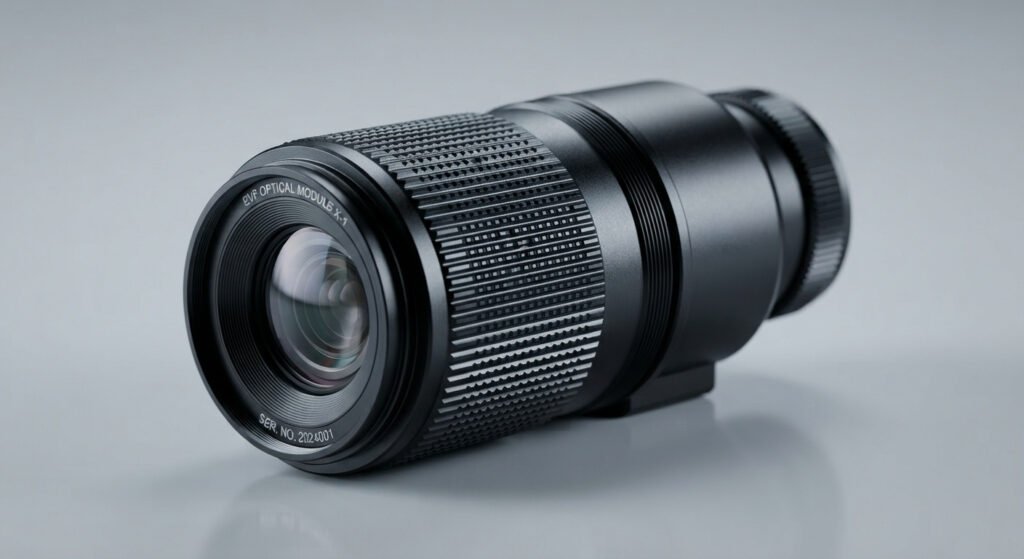
An EVF, or electronic viewfinder, optical module is the combined assembly of a micro display, magnifying optics, and supporting mechanical components that allow a user to view a digital image as if looking through a traditional optical viewfinder. Unlike optical viewfinders that rely purely on mirrors and prisms, EVF modules process a live digital feed and project it through a lens system directly to the user’s eye.
This technology has become standard in mirrorless cameras, camcorders, and increasingly in industrial and medical imaging devices. The optical module’s design determines how accurately and comfortably that digital image translates into a natural viewing experience.
Core EVF Optical Module Specifications Explained
Display Resolution
Resolution is one of the most important EVF optical module specifications, as it directly determines image sharpness. Measured in pixels or dots, higher resolution allows finer detail to be visible, which is particularly important for manual focusing, professional photography, and precision industrial applications.
Lower resolution modules may be sufficient for basic monitoring tasks, but professional and high-end imaging systems typically demand higher pixel density to avoid a pixelated or grainy appearance, especially when zoomed in for focus confirmation.
Magnification
Magnification refers to how large the displayed image appears to the user’s eye, usually expressed as a ratio. Higher magnification creates a more immersive viewing experience but can make it harder to see the entire frame at once, particularly for users wearing glasses.
Balancing magnification with practical usability is a key design consideration, since excessive magnification without adequate eye relief can create a frustrating experience for the end user.
Eye Relief
Eye relief is the distance between the viewfinder’s rear lens element and the user’s eye at which the full image remains visible. This specification is particularly important for users who wear glasses, as insufficient eye relief can force them to press uncomfortably close to the viewfinder or lose part of the visible frame.
Longer eye relief generally improves comfort and accessibility, making it an important consideration for consumer-facing products where a wide range of users, including those wearing prescription eyewear, will interact with the device.
Diopter Adjustment Range
The diopter adjustment range allows users to fine-tune the viewfinder’s focus to match their individual eyesight, without needing to wear glasses while using the device. A wider diopter range accommodates a broader range of users, improving overall product accessibility and comfort.
Refresh Rate
Refresh rate, measured in hertz, determines how many times per second the displayed image updates. A higher refresh rate results in smoother motion, which is especially important when tracking fast-moving subjects or panning quickly across a scene.
Lower refresh rates can introduce visible lag or motion blur, which may be acceptable for basic applications but problematic for professional sports, wildlife, or action photography where precise timing matters.
Field of View
Field of view describes how much of the scene is visible through the viewfinder at any given time. A wider field of view can make composition easier and reduce the feeling of “tunnel vision,” while a narrower field of view may concentrate more detail into the visible area.
Why These Specifications Matter for Product Performance
Each of these EVF optical module specifications interacts with the others to shape the overall user experience. For example, high resolution paired with a slow refresh rate can still result in a frustrating experience during fast action, despite excellent image clarity in static scenes.
Similarly, strong magnification without sufficient eye relief can undermine comfort, even if the displayed image itself is technically impressive. This is why optical module design requires careful balancing of specifications rather than simply maximising individual numbers.
For manufacturers, understanding these interdependencies is essential when specifying components for a new product, as prioritising the wrong specification can lead to a device that looks impressive on paper but underperforms in real-world use.
How to Choose the Right EVF Optical Module for Your Application
Define Your Primary Use Case
Different applications prioritise different specifications. Professional photography and videography often demand high resolution and fast refresh rates, while industrial monitoring applications may prioritise reliability and consistent performance over raw specification numbers.
Consider User Comfort Requirements
If your product will be used for extended periods, such as in medical imaging or professional video production, eye relief and diopter adjustment range become critical factors in preventing user fatigue and ensuring accessibility for a wider range of users.
Balance Cost with Performance Needs
Higher specifications generally come with increased cost. It’s important to identify which specifications genuinely impact your product’s performance and user experience, rather than over-specifying components that won’t provide meaningful benefit for your specific application.
Evaluate Environmental Operating Conditions
Some EVF optical modules are designed to perform reliably across a wider range of temperatures, humidity levels, or lighting conditions. If your product will be used outdoors or in industrial environments, confirming the module’s environmental tolerance is just as important as its core optical specifications.
Common Applications for EVF Optical Modules
EVF optical modules are used across a growing range of industries beyond traditional photography. Mirrorless and compact cameras remain the most common application, where users rely on the viewfinder for accurate composition and focus confirmation in varying light conditions.
Industrial and medical imaging devices increasingly incorporate EVF technology for tasks requiring precise visual monitoring, such as endoscopic procedures or quality control inspection systems. In these settings, reliability and consistent image clarity often take priority over features like magnification or field of view.
Surveillance and security equipment also make use of EVF optical modules, where operators need clear, real-time visual feedback for extended monitoring periods, making eye relief and refresh rate particularly important specifications.
Common Mistakes When Specifying EVF Optical Modules
Focusing Only on Resolution
While resolution is important, focusing exclusively on this specification while ignoring refresh rate, eye relief, or magnification can result in a module that performs poorly in real-world conditions, despite impressive technical specifications on paper.
Ignoring User Demographics
Failing to consider the range of users who will interact with the product, particularly those wearing glasses, can lead to accessibility issues that weren’t apparent during initial design and testing phases.
Overlooking Environmental Testing
Some manufacturers focus purely on optical performance in controlled lab conditions without adequately testing how the module performs under real-world environmental stress, such as temperature fluctuations or humidity exposure.
Underestimating Integration Complexity
EVF optical modules must integrate seamlessly with surrounding mechanical and electronic components. Underestimating this integration complexity during the specification phase can lead to costly redesigns later in the product development process.
Working with an Optical Module Manufacturer
Given the technical complexity involved in EVF optical module specifications, working closely with an experienced manufacturer can significantly streamline product development. A knowledgeable manufacturing partner can help balance competing specifications based on your specific application, budget, and target user base.
This collaboration is particularly valuable during early design stages, where adjustments to specifications are far less costly than after production tooling has already been finalised. Manufacturers with strong optical design and reverse engineering capabilities can also help troubleshoot performance issues or replicate specific optical characteristics from existing reference designs.
The Manufacturing Process Behind EVF Optical Modules
Producing a reliable EVF optical module involves far more than assembling a display and a lens. The process typically begins with optical system design, where engineers calculate the precise lens curvature, spacing, and coating requirements needed to achieve the target magnification and field of view without introducing distortion at the edges of the image.
Once the optical design is finalised, structural design integrates the lens system with the micro display, ensuring precise alignment that won’t shift under normal handling, temperature changes, or vibration. Even a fraction of a millimetre of misalignment can noticeably affect image sharpness or introduce unwanted colour fringing near the edges of the frame.
Coating application is another critical stage, particularly for anti-fog and anti-reflective treatments that improve clarity and reduce glare under varying lighting conditions. These coatings must be applied with extreme precision, as inconsistent thickness can create visible artefacts or reduce the coating’s effectiveness over time.
Before final assembly, most manufacturers conduct rigorous testing, including resolution verification, refresh rate confirmation, and environmental stress testing to simulate real-world usage conditions. This testing phase helps identify potential weaknesses before the module reaches full production, reducing the risk of performance issues once integrated into a finished camera or imaging device.
Understanding this manufacturing process gives buyers and product designers a clearer picture of why specification quality can vary significantly between suppliers, even when listed numbers appear similar on paper.
Conclusion
Understanding EVF optical module specifications is essential for anyone involved in designing or selecting electronic viewfinders for imaging applications. Resolution, magnification, eye relief, diopter range, refresh rate, and field of view all play interconnected roles in determining how a viewfinder performs and feels to the end user.
Rather than focusing on a single impressive specification, successful EVF module selection requires balancing these factors according to your specific use case, user demographics, and environmental requirements. Working with an experienced optical manufacturer can help ensure your final product delivers both technical performance and genuine user comfort.
Frequently Asked Questions
What is the most important EVF optical module specification? There isn’t a single most important specification, as resolution, refresh rate, eye relief, and magnification all interact to determine overall performance. The right balance depends on your specific application and target users.
How does eye relief affect viewfinder usability? Eye relief determines how far a user’s eye can be from the viewfinder while still seeing the full image, which is particularly important for users wearing glasses who need more distance to view comfortably.
Why does refresh rate matter in an EVF optical module? Refresh rate affects how smoothly motion appears through the viewfinder. Higher refresh rates reduce lag and blur, which is especially important for tracking fast-moving subjects.
Can EVF optical modules be customised for specific applications? Yes, many manufacturers offer customisation options for resolution, magnification, and other specifications to suit specific industrial, medical, or consumer imaging applications.
Are higher specifications always better for EVF optical modules? Not necessarily. Higher specifications often increase cost and complexity, so it’s important to choose specifications that genuinely match your application’s requirements rather than maximising every parameter unnecessarily.