
TL;DR
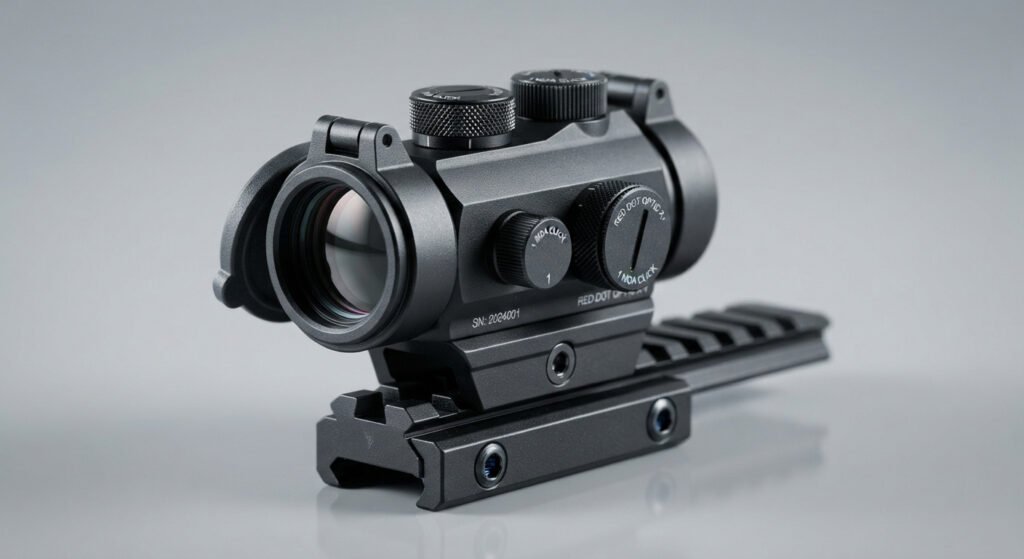
A red dot sight is used for fast, accurate target acquisition by projecting an illuminated dot onto a lens, allowing the shooter to align their eye, the dot, and the target without needing to align traditional iron sights. It’s widely used in hunting, sport shooting, self-defense, law enforcement, and airsoft applications. Its main advantage is speed and simplicity, especially in close to medium range shooting scenarios.
Quick Answer
A red dot sight is used to help shooters aim quickly and accurately by displaying an illuminated reticle, usually a single dot, on a lens without magnification. It allows both eyes to stay open and focused on the target rather than switching focus between front and rear iron sights. This makes it particularly effective for close-quarters shooting, home defense, hunting, and competitive shooting sports where speed and target acquisition matter most.
Introduction
If you’ve spent any time browsing firearm accessories or talking to experienced shooters, you’ve likely come across the term “red dot sight.” But what is a red dot sight used for, exactly, and why has it become such a popular choice across so many different shooting disciplines?
At its core, a red dot sight is designed to simplify and speed up the aiming process. Unlike traditional iron sights, which require precise alignment of a front and rear sight post, a red dot sight projects a single illuminated point directly onto your line of sight, letting you focus entirely on your target.
This guide explores the practical uses of a red dot sight, how it works, and why it has become a preferred choice for hunters, competitive shooters, law enforcement professionals, and everyday firearm owners alike.
How a Red Dot Sight Works
This type of optic uses a small LED to project a red or sometimes green illuminated dot onto a specially coated lens. This lens reflects the dot back to the shooter’s eye while allowing light from the target area to pass through normally, creating the effect of a floating dot superimposed over the target.
Because the dot appears to sit directly on the target regardless of minor head movement (within reason), shooters don’t need to worry about precisely aligning their eye with the sight the way they would with traditional iron sights. This is often referred to as being largely “parallax-free” at typical engagement distances, making aiming faster and more intuitive.
What Is a Red Dot Sight Used For in Practical Applications?
Hunting
Many hunters use this optic for fast target acquisition in dynamic hunting situations, particularly when tracking moving game at closer ranges. The simplicity of placing the dot on the target and firing makes it especially useful for driven hunts or situations where quick reaction time is essential.
Home and Personal Defense
For self-defense purposes, this type of sight offers a significant advantage in high-stress situations. Since both eyes remain open and focused on the threat rather than the sight itself, users can maintain better situational awareness while still aiming accurately.
Competitive Shooting Sports
In shooting sports such as practical pistol competitions, three-gun matches, and certain rifle disciplines, this optic is used to maximise speed between target transitions. Competitors often rely on the dot’s simplicity to shave crucial fractions of a second off their overall time.
Law Enforcement and Tactical Use
Law enforcement officers frequently use red dot sights on service weapons for their combination of speed, reliability, and ease of use under stress. The reduced need for precise eye alignment can be particularly valuable in fast-evolving tactical situations.
Airsoft and Recreational Shooting
Beyond live firearms, these optics are also widely used on airsoft replicas and recreational shooting setups, where users want a realistic training experience or simply enjoy the improved target acquisition speed the technology offers.
Key Benefits of Using a Red Dot Sight
Faster Target Acquisition
One of the primary reasons shooters choose this type of optic is the speed advantage it offers. Rather than aligning two separate sight points, the shooter simply places the dot on the target, significantly reducing the time needed to achieve an accurate sight picture.
Improved Accuracy at Close to Medium Range
For close and medium-range shooting, this optic often improves accuracy by removing the need to align multiple reference points. This is particularly beneficial for shooters who may struggle with traditional iron sight alignment due to eye dominance or vision differences.
Both-Eyes-Open Shooting
Keeping both eyes open while aiming improves peripheral awareness, which is especially valuable in self-defense or tactical scenarios where situational awareness can be just as important as accuracy.
Versatility Across Firearm Types
Red dot sights can be mounted on pistols, rifles, shotguns, and even crossbows, making them a versatile optic choice across a wide range of shooting applications and firearm platforms.
Red Dot Sight vs Traditional Iron Sights
While iron sights remain reliable and battery-free, they generally require more precise alignment and practice to use effectively at speed. This modern optic simplifies the process significantly, particularly for newer shooters or those transitioning between different firearms with varying sight configurations.
However, iron sights don’t rely on batteries, making them a valuable backup option. Many red dot sight users choose to keep co-witnessed iron sights as a backup in case of battery failure or optic damage, combining the speed of a red dot with the reliability of traditional sights.
Red Dot Sight vs Magnified Optics
Unlike magnified scopes, this standard optic typically offers no magnification, keeping the field of view wide and natural. This makes it particularly effective for close to medium-range engagements where speed matters more than extreme long-range precision.
For longer-range shooting, many users pair a red dot sight with a magnifier accessory, or choose a low-power variable optic instead, depending on their specific shooting needs and typical engagement distances.
Choosing the Right Red Dot Sight for Your Needs
Consider Your Primary Use Case
Whether you’re choosing this optic for hunting, competition, or defense, your primary use case should guide your choice of dot size, battery life, and mounting compatibility.
Battery Life and Reliability
Since these sights rely on battery power, considering expected battery life and the reliability of the electronics is important, particularly for defensive or duty use where consistent performance is critical.
Durability and Weather Resistance
For hunting or outdoor use, the optic should be able to withstand recoil, moisture, and temperature variations without losing zero or reliability.
Mounting Compatibility
Ensuring your chosen red dot sight is compatible with your firearm’s mounting system, whether that’s a standard Picatinny rail or a pistol-specific footprint, is essential for proper installation and function.
Common Misconceptions About Red Dot Sights
They Make You an Instant Expert Shot
While a red dot sight simplifies the aiming process, it doesn’t replace proper training and practice. Fundamentals like trigger control, stance, and follow-through remain essential for consistent accuracy.
They’re Only for Close-Range Shooting
While red dot sights excel at close to medium range, many shooters successfully use them at extended distances with proper training and, in some cases, magnifier accessories.
All Red Dot Sights Are the Same
Red dot sight quality, durability, and features vary significantly between models. Understanding your specific needs helps ensure you choose an optic that genuinely matches your intended use case.
Maintenance Tips for Red Dot Sights
Keeping your red dot sight clean and properly maintained helps ensure consistent performance over time. Regularly check and replace batteries as needed, and store your firearm in a way that protects the optic’s lens from scratches or impact damage.
Periodically verify your zero, especially after any impact, extended storage, or transport, to ensure the dot remains accurately aligned with your point of impact.
Red Dot Sight Reticle Types and Dot Sizes
Not all illuminated reticles look the same, and understanding the available options can help you choose an optic suited to your shooting style. Dot size is typically measured in Minutes of Angle (MOA), with smaller dots, such as 2 MOA, offering more precision for deliberate, accurate shots, while larger dots, like 6 MOA or above, are designed for extremely fast target acquisition where precision matters less than raw speed.
Some models also offer circle-dot reticles, combining a small precision dot within a larger circle. This design allows shooters to use the circle for quick, instinctive target acquisition at close range, then refine their aim using the smaller dot for more precise shots at slightly greater distances.
Brightness settings are another important consideration. Many optics include multiple illumination levels, allowing users to adjust dot intensity based on lighting conditions. A dot that’s too bright in low light can obscure fine details on the target, while a dot that’s too dim in bright sunlight may be difficult to see at all. Selecting an optic with a wide brightness adjustment range helps ensure reliable visibility across varying environments and times of day.
The Role of This Technology in Modern Shooting Culture
Over the past two decades, this style of optic has shifted from a niche accessory to a mainstream standard across multiple shooting disciplines. Improvements in battery efficiency, durability, and affordability have made these sights accessible to a much wider range of shooters, from casual hobbyists to professional operators.
This shift has also influenced firearm design itself, with many modern pistols and rifles now manufactured with optic-ready slides or mounting systems built in from the factory. This growing integration reflects just how central fast, intuitive aiming technology has become to contemporary shooting culture, whether for sport, defense, or professional use.
As training methodologies continue to evolve alongside this technology, many shooting instructors now incorporate optic-specific techniques into their curriculum, recognising that aiming with an illuminated reticle requires slightly different fundamentals compared to traditional iron sight shooting.
Conclusion
Understanding what a red dot sight is used for helps explain why this optic has become so popular across hunting, competitive shooting, law enforcement, and personal defense applications. Its core advantage lies in speed and simplicity, allowing shooters to acquire targets quickly while maintaining better situational awareness compared to traditional iron sights.
Whether you’re new to shooting sports or looking to upgrade your current setup, choosing the right red dot sight for your specific needs can significantly improve both your speed and confidence behind the firearm.
Frequently Asked Questions
Is a red dot sight good for beginners? Yes, a red dot sight is often recommended for beginners because it simplifies the aiming process, making it easier to achieve accurate shots without mastering precise iron sight alignment.
Can a red dot sight be used for long-range shooting? While primarily designed for close to medium-range use, some shooters pair a red dot sight with a magnifier accessory to extend its effective range for longer distance shooting.
Do red dot sights need batteries? Yes, most red dot sights rely on battery power to illuminate the dot, though many modern models offer extended battery life, sometimes lasting thousands of hours on a single charge.
What’s the difference between a red dot sight and a holographic sight? A red dot sight typically uses simple LED and lens technology, while a holographic sight uses a laser to create a more complex reticle pattern, often with slightly different visual characteristics and price points.
Can a red dot sight be mounted on a pistol? Yes, many modern pistols are designed or can be modified to accept a red dot sight, offering faster target acquisition compared to traditional pistol iron sights alone.