
TL;DR
Double glazed glass consists of two panes of glass separated by a sealed air or gas-filled gap, designed to reduce heat loss, cut outside noise, and limit condensation on windows. It is widely used in homes, offices, and commercial buildings because it improves energy efficiency and indoor comfort compared to single glazing. Choosing the right type depends on your climate, budget, and whether you prioritize insulation, soundproofing, or security. This guide explains how double glazed glass works, its benefits, its limitations, and how to choose the right option for your property.
Quick Answer
Double glazed glass is a window glazing unit made of two glass panes with a sealed gap between them, usually filled with air or an inert gas such as argon. The gap acts as an insulating barrier, slowing the transfer of heat and sound through the window. This makes double glazed glass more thermally efficient than single glazing, helps reduce energy bills, minimizes condensation build-up, and can also improve a room’s acoustic comfort. It is one of the most common glazing choices for residential and commercial buildings today.
Introduction
Anyone who has felt a cold draft near an old window in winter, or noticed how much street noise seeps through a thin pane of glass, already understands the basic problem that double glazed glass was designed to solve. A single pane of glass is a poor insulator. It lets heat escape quickly in cold weather, allows heat to enter just as easily in summer, and does little to block outside noise.
Double glazed glass addresses this by adding a second pane of glass with a sealed gap in between. That gap, whether filled with air or a gas, acts as a buffer that slows down heat transfer. Over the past few decades, this type of glazing has become a standard feature in new construction and a common upgrade for older buildings, largely because of its impact on comfort, energy consumption, and noise reduction.
In this guide, we will look at what double glazed glass actually is, how it works, the different types available, how it compares to single and triple glazing, what affects its cost, and what to consider when choosing it for a home or commercial project. Whether you are renovating an older property or specifying windows for a new build, understanding how double glazed glass performs will help you make a more informed decision.
What Is Double Glazed Glass?
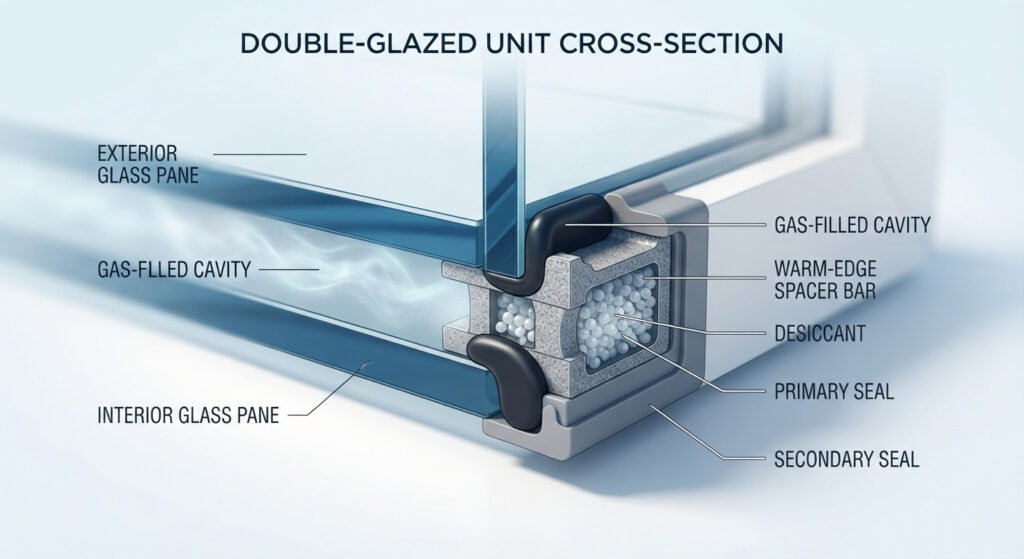
Double glazed glass, also called an insulated glass unit (IGU), is made up of two panes of glass held apart by a spacer bar around the edges. The spacer keeps the panes at a fixed distance, typically somewhere between 6mm and 20mm, and the entire unit is sealed to keep moisture and outside air from entering the gap. The space between the panes is either left as dry air or filled with an inert gas that improves insulation performance further.
The two panes are usually bonded to the spacer with a primary seal, and a secondary structural seal is applied around the outer edge to add durability and keep the unit airtight over time. This sealed construction is what allows double glazed glass to maintain its insulating properties for many years, provided the seal remains intact.
How Double Glazed Glass Is Made
Manufacturing a double glazed unit involves cutting two pieces of glass to the required size, cleaning them thoroughly, and fitting a spacer bar filled with a desiccant material around the perimeter of one pane. The desiccant absorbs any residual moisture trapped inside the unit during assembly, which helps prevent internal condensation later on. The second pane is then placed on top, and the unit is pressed and sealed. If a gas fill is used, it is injected into the cavity before the final seal is applied.
How Double Glazed Glass Works
The insulating effect of double glazed glass comes primarily from the gap between the two panes. Air and gas conduct heat far more slowly than glass does, so the enclosed space acts as a thermal barrier. Heat that would otherwise pass directly through a single pane has to cross the first pane, move through the insulating gap, and then cross the second pane, which significantly slows the overall rate of heat transfer.
The Role of Low-E Coatings
Many double glazed units also include a low-emissivity, or Low-E, coating on one of the internal glass surfaces. This is an extremely thin, virtually invisible metallic layer that reflects infrared heat back toward its source while still allowing visible light to pass through. In colder climates, a Low-E coating helps keep interior heat inside during winter.
In warmer climates, it can be applied to reduce the amount of solar heat entering a room. This is one of the reasons why not all double glazed glass performs the same way, since coating type and placement affect how heat and light interact with the unit.
The Role of Gas Fills
Instead of ordinary air, many double glazed units use argon or krypton gas in the sealed cavity. These gases are denser than air and conduct heat more slowly, which improves the unit’s overall insulating performance. Argon is the more common and cost-effective option, while krypton is generally reserved for units with narrower gaps where its higher insulating properties are more noticeable.
Understanding U-Values
The insulating performance of a window is often described using a U-value, which measures the rate of heat transfer through the glazing. A lower U-value indicates better insulation, meaning less heat escapes through the window.
Double glazed glass generally achieves noticeably lower U-values than single glazing, though the exact figure depends on the glass thickness, gap size, gas fill, and any coatings used. When comparing glazing options, checking the U-value alongside other specifications gives a clearer picture of expected performance than relying on the glazing type alone.
Benefits of Double Glazed Glass
The appeal of double glazed glass comes from a combination of practical advantages that affect daily comfort as well as long-term running costs.
Improved Thermal Insulation
Because the sealed gap slows heat transfer, rooms with double glazed windows tend to retain warmth more effectively in winter and stay cooler in summer compared to those with single glazing. This can translate into more consistent indoor temperatures and potentially lower heating and cooling demands, particularly in older buildings where windows were previously a major source of heat loss.
Reduced Outside Noise
The extra pane and sealed air gap also help dampen sound transmission from outside. This is especially valuable for properties near busy roads, airports, or urban centers, where street noise can otherwise be a persistent source of disruption. While double glazing does not eliminate noise entirely, it generally offers a noticeable improvement over single-pane windows, particularly for mid-to-high frequency sounds.
Less Condensation
Single-pane windows often develop condensation on the inside surface during cold weather, because the glass itself becomes cold enough for indoor moisture to condense on contact. Double glazed glass keeps the inner pane closer to room temperature, which reduces this effect. Less condensation can also mean less risk of mold or mildew forming around window frames over time.
Added Security
Because double glazed units contain two panes of glass, they are generally more resistant to being broken through than a single pane, particularly when combined with toughened or laminated glass. While glazing alone should not be relied upon as a sole security measure, it can contribute to a property’s overall resistance to forced entry when paired with secure frames and locking systems.
Potential Energy Savings
By reducing heat loss and heat gain, double glazed glass can lower the amount of energy a heating or cooling system needs to use to maintain a comfortable indoor temperature. The scale of savings varies significantly depending on the building’s existing insulation, the age and type of windows being replaced, and the local climate, so it is worth discussing realistic expectations with a qualified glazing professional rather than assuming a fixed percentage improvement.
Double Glazed Glass vs Single Glazed Glass
Single glazed glass consists of just one pane, with no insulating air gap. It is generally less expensive upfront but performs noticeably worse in terms of thermal insulation, noise reduction, and condensation control. In climates with cold winters or hot summers, the difference in comfort and energy use between single and double glazing tends to be substantial, which is why building codes in many regions now require or strongly encourage double glazing in new construction.
That said, single glazing may still be appropriate in certain contexts, such as mild climates, temporary structures, or interior partitions where thermal performance is less of a priority. The decision often comes down to balancing upfront cost against long-term comfort and efficiency goals.
Double Glazed Glass vs Triple Glazed Glass
Triple glazed glass adds a third pane and a second sealed gap, offering even better insulation than standard double glazing. It is particularly popular in very cold climates, where the additional insulation can noticeably reduce heat loss. However, triple glazing is heavier, more expensive, and can slightly reduce the amount of visible light entering a room compared to double glazing.
For most moderate climates, double glazed glass offers a practical balance between performance, weight, and cost. Triple glazing tends to make the most sense in regions with extreme winter temperatures or where energy efficiency requirements are particularly strict. A local glazing specialist can help assess whether the additional investment in triple glazing is likely to be worthwhile for a specific property and climate.
Types of Double Glazed Glass
Not all double glazed units are built the same way, and the right choice depends on the specific goals for a project.
Low-E double glazed glass includes a reflective coating designed to manage heat transfer, and is one of the most commonly specified options for improving energy efficiency. Toughened, or tempered, double glazed glass uses safety glass that breaks into small, less hazardous fragments if shattered, making it a common choice for doors, low-level windows, and areas with higher safety requirements.
Laminated double glazed glass includes an interlayer that holds the glass together even when cracked, which can improve both security and sound insulation. Tinted or solar control double glazed glass is designed to reduce glare and limit solar heat gain, which can be useful in rooms that receive strong direct sunlight. Self-cleaning double glazed glass has a coating that helps break down organic dirt using sunlight and rinses more easily in rain, reducing the frequency of manual cleaning on hard-to-reach windows.
Factors That Affect the Cost of Double Glazed Glass
Several variables influence how much a double glazed glass installation will cost, and prices can vary considerably between regions and suppliers. The size and number of windows being fitted is one of the most obvious factors, since larger openings require more glass and stronger frames. The type of glass used also matters, as Low-E coatings, laminated layers, and gas fills such as argon typically add to the cost compared to a basic dual-pane unit.
Frame material plays a role as well. Double glazed units can be fitted into uPVC, aluminum, timber, or composite frames, each with different price points and maintenance requirements. Installation complexity is another consideration, particularly for older properties where existing frames need modification or where access is difficult. Because these variables differ so much from one project to another, it is generally best to request a detailed quote from a reputable local supplier rather than relying on general price estimates found online.
How to Choose the Right Double Glazed Glass Supplier
Selecting a reliable supplier or installer is just as important as choosing the right type of glass. It is worth checking whether a company has relevant industry certifications, clear warranty terms on both the glass unit and the installation work, and a track record of completed projects that can be verified through reviews or references.
Asking for the specific U-value, gas fill, and coating details of the proposed glazing unit, rather than accepting vague descriptions like “energy efficient,” helps ensure you know exactly what you are paying for. For larger commercial projects, working with a supplier that can provide technical documentation and support reverse engineering or custom specifications may be particularly valuable.
Installation and Maintenance Considerations
Proper installation has a significant impact on how well double glazed glass performs over time. Even a high-quality unit will underperform if it is not fitted correctly, since gaps around the frame can allow drafts and moisture to bypass the insulating benefits of the glazing itself. It is generally advisable to have double glazed windows installed by a qualified professional who can ensure the frame is properly sealed and aligned.
Maintenance for double glazed glass is relatively straightforward. Regular cleaning of the exterior glass surfaces, checking that seals and frames remain intact, and ensuring drainage channels are not blocked will help the windows perform well for years. Because the insulating gas and seal are enclosed within the unit itself, there is generally little that homeowners need to do to maintain the internal performance of the glazing, aside from watching for signs of seal failure.
Common Problems and Signs of Double Glazed Glass Failure
Like any building component, double glazed glass units can develop problems over time, usually related to the seal around the edges. The most recognizable sign of seal failure is fogging or condensation appearing between the two panes of glass, which indicates that moisture has entered the sealed cavity and the desiccant is no longer able to absorb it effectively.
This is a cosmetic and performance issue rather than a safety hazard in most cases, but it does mean the insulating gas, if used, has likely escaped, reducing the unit’s thermal performance.
Other signs to watch for include visible gaps or cracking around the spacer bar, difficulty opening or closing the window due to frame misalignment, or a noticeable increase in drafts near the window compared to when it was first installed.
In most cases, a failed double glazed unit can be replaced without needing to replace the entire window frame, which can make repairs more cost-effective than a full window replacement.
Is Double Glazed Glass Worth It?
For most residential and commercial buildings, double glazed glass offers a meaningful improvement in comfort, noise reduction, and energy efficiency compared to single glazing.
Whether the investment makes sense for a specific property depends on factors such as the local climate, the condition of existing windows, energy costs in the area, and how long the property owner plans to stay in the building.
Buildings in colder or noisier environments tend to see the most noticeable benefit, while the payback period for energy savings will vary based on individual circumstances.
Because glazing decisions can involve both a significant upfront cost and long-term performance considerations, it is generally worthwhile to consult with a qualified glazing professional who can assess the specific property and recommend a glazing specification suited to its needs, local building codes, and climate conditions.
Conclusion
Double glazed glass has become a standard choice for modern windows because it addresses several practical problems at once: heat loss, outside noise, and condensation. By using two panes of glass separated by a sealed, often gas-filled gap, this type of glazing slows heat transfer far more effectively than a single pane, while also offering improvements in comfort and, in many cases, security.
The right specification, whether that involves a Low-E coating, argon gas fill, or a particular frame material, depends on the climate, budget, and priorities of the specific project. Comparing detailed specifications like U-values and consulting with an experienced supplier will help ensure the final choice performs as expected for years to come.
Frequently Asked Questions
What is double glazed glass made of? Double glazed glass is made of two panes of glass separated by a spacer bar and sealed around the edges, with the gap between the panes typically filled with air or an inert gas such as argon.
Does double glazed glass really reduce energy bills? It can contribute to lower heating and cooling demands by reducing heat loss and heat gain through windows, though the actual savings depend on the building’s overall insulation, climate, and the type of windows being replaced.
How long does double glazed glass typically last? Double glazed units can last for many years when properly installed and maintained, though the exact lifespan depends on the quality of the seal, the materials used, and environmental conditions. Seal failure, indicated by fogging between the panes, is usually the first sign that a unit needs attention.
Is double glazed glass better than triple glazed glass? Triple glazed glass offers higher insulation than double glazing but is heavier and more expensive. Double glazed glass is generally a practical choice for moderate climates, while triple glazing tends to suit regions with more extreme winter temperatures.
Can double glazed glass be repaired if it fogs up? In most cases, a fogged double glazed unit can be replaced within the existing window frame rather than requiring a full window replacement, which is typically more cost-effective.