
TL;DR
Motorcycle MLA lighting technology uses micro-lens-array optics to project sharp, controlled patterns of light onto the road surface, improving rider visibility and safety in a compact, low-profile design. Unlike traditional headlamp or reflector-based systems, MLA technology allows precise beam shaping from a very small housing. This guide explains how the technology works, why manufacturers are adopting it, and what riders should know before choosing an MLA-based lighting setup.
Quick Answer
Motorcycle MLA lighting technology refers to lighting systems built around micro-lens arrays — tiny grids of individual lenses that focus and direct light with high precision. On motorcycles, this technology enables compact ground projection lights, adaptive beam patterns, and sharper illumination compared to older reflector or single-lens designs. Because the lens array can be just a few millimeters thick, MLA systems fit into slim housings, making them popular for both safety lighting and styling applications on modern motorcycles.
Introduction
Motorcycle lighting has changed considerably over the past decade, and motorcycle MLA lighting technology is one of the more significant shifts driving that change. Traditional headlamps and auxiliary lights rely on a single lens or reflector to shape a beam, which limits how precisely that light can be controlled once it leaves the housing.
Micro-lens-array systems approach the problem differently. Instead of one large lens, hundreds or even thousands of tiny lenses work together to focus and redirect light with far greater accuracy. This shift matters for motorcycles specifically, where space is limited and visibility — both for the rider and to other road users — is a constant safety concern.
This article explains what this lighting approach actually is, how it works at a technical level, why it’s becoming more common in aftermarket and OEM lighting products, and what riders and manufacturers should consider when evaluating MLA-based lighting options. Whether you’re researching this technology for a personal upgrade or comparing suppliers for a lighting product line, this guide covers the fundamentals in practical terms.
What Is Motorcycle MLA Lighting Technology?
At its core, motorcycle MLA lighting technology is built around a micro-lens array — a flat optical component made up of many extremely small lenses arranged in a grid pattern. Each lens in the array focuses a small portion of light from an LED source, and together they combine to produce a controlled, uniform beam or pattern.
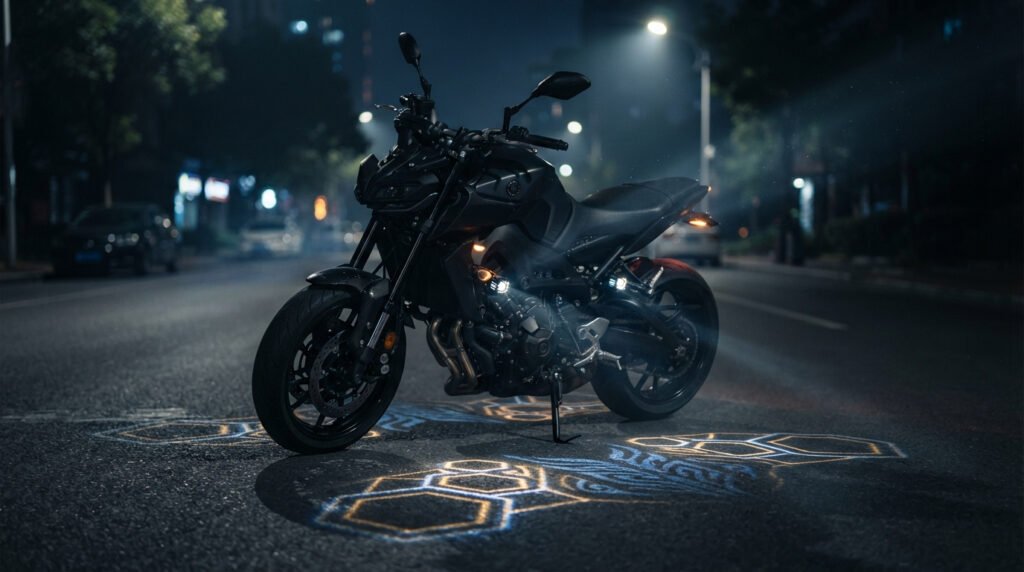
This differs from conventional lighting, which typically depends on a single reflector or lens shaped to spread light across a wide area. Because an MLA system handles light in smaller, more manageable segments, it can achieve sharper beam edges, more even illumination, and even project simple patterns or logos onto the ground — something traditional optics struggle to do without significant bulk.
How Motorcycle MLA Lighting Technology Works
Understanding the basic mechanics helps explain why this technology has gained traction across both automotive and motorcycle lighting design.
Light Source and Lens Array Interaction
An LED or small array of LEDs sits behind the micro-lens array, emitting light toward the lens grid. Each individual micro-lens captures a portion of that emitted light and refracts it in a controlled direction. Because the lenses are arranged precisely, the combined output can be shaped far more accurately than light passing through a single reflector.
Beam Shaping and Pattern Projection
One of the defining advantages of motorcycle MLA lighting technology is its ability to project defined shapes or patterns onto a surface, such as the road beneath or beside the motorcycle. This is achieved by controlling which micro-lenses receive light and how their individual outputs overlap, allowing manufacturers to create ground projection effects, warning patterns, or branded lighting designs.
Compact Housing Design
Because the lens array itself can be extremely thin, the entire lighting unit requires far less depth than traditional headlamp assemblies. This is particularly valuable on motorcycles, where mounting space is limited compared to cars, and where lighting components often need to fit into narrow fairings, mirror housings, or under-seat compartments.
Why Manufacturers Are Adopting MLA Technology for Motorcycles
Several practical factors are driving increased use of motorcycle MLA lighting technology across both OEM and aftermarket products.
Improved Rider Visibility
Sharper, more controlled beam patterns help riders see road surface details more clearly, particularly at the edges of the illuminated area where traditional lighting often becomes diffuse and less useful. This is especially relevant for auxiliary ground lighting used to illuminate the area immediately around the motorcycle at night.
Enhanced Safety Signaling
Ground projection lighting using MLA systems can create warning patterns visible to nearby vehicles, which is particularly useful in situations like lane changes, braking, or low-visibility conditions. Some systems are designed to activate specific patterns automatically based on rider input or proximity sensors, though implementation varies by manufacturer.
Compact Integration Without Sacrificing Performance
Because MLA components are so thin, designers can integrate advanced lighting features without significantly altering a motorcycle’s aerodynamics or aesthetic design. This allows manufacturers to add functional lighting improvements without the bulk associated with older projector-style housings.
Styling and Brand Differentiation
Beyond safety applications, motorcycle MLA lighting technology also supports decorative lighting effects, including logo projections or distinctive light patterns used for brand identity. This dual-purpose functionality — safety and styling — makes the technology attractive to manufacturers looking to differentiate their products in a competitive market.
Comparing MLA Lighting to Traditional Motorcycle Lighting Systems
Riders and buyers often want to know how MLA-based lighting actually compares to more familiar reflector or single-lens LED systems.
Traditional reflector-based lights generally produce a wider, softer beam that’s effective for general illumination but less precise at the edges. Single-lens LED projectors improve on this somewhat but still require more depth to achieve sharp beam control. Motorcycle MLA lighting technology, by contrast, can achieve comparable or superior beam precision in a fraction of the space, though it typically comes at a higher manufacturing cost due to the complexity of producing accurate micro-lens arrays.
For riders prioritizing compact design and precise beam control, MLA systems offer a clear advantage. For applications where raw brightness over a very wide area matters more than precision, traditional systems may still be a reasonable and more cost-effective choice.
Practical Considerations Before Choosing MLA-Based Lighting
Before investing in motorcycle MLA lighting technology, whether as a rider upgrading a personal bike or a business sourcing components for a product line, a few practical factors are worth reviewing.
Local Regulations
Ground projection and auxiliary lighting rules vary significantly between regions. Some jurisdictions have specific requirements around beam color, brightness, and how the light may be aimed relative to the road surface. Checking local regulations before installation helps avoid compliance issues.
Build Quality and Optical Precision
Not all micro-lens arrays are manufactured to the same tolerance. Lower-quality components may produce uneven or distorted patterns, reducing the visual and functional benefits the technology is meant to provide. Requesting sample output or manufacturer specifications can help verify quality before committing to a supplier.
Power and Wiring Compatibility
MLA lighting units typically use LED sources, which generally have modest power requirements, but wiring integration still needs to match the motorcycle’s existing electrical system. Confirming voltage and connector compatibility avoids installation complications.
Durability in Outdoor Conditions
Since motorcycles are exposed to weather, vibration, and road debris, any lighting component — including MLA-based units — should be rated for outdoor durability, including water resistance and impact tolerance appropriate for the intended mounting location.
The Future of Motorcycle MLA Lighting Technology
As micro-lens-array manufacturing becomes more refined and cost-effective, this technology is likely to expand further into mainstream motorcycle lighting, following a similar trajectory to its adoption in automotive headlamp design. Continued miniaturization may also open possibilities for more advanced dynamic lighting features, such as adaptive patterns that respond to speed, lean angle, or surrounding traffic conditions.
While widespread adoption will depend on manufacturing costs coming down further, the fundamental advantages of compact size and precise beam control make motorcycle MLA lighting technology a strong candidate for continued growth in both safety-focused and style-focused lighting products.
MLA Lighting in OEM vs Aftermarket Products
Another important distinction worth understanding is how motorcycle MLA lighting technology shows up differently depending on whether it comes as a factory-installed feature or an aftermarket accessory. OEM implementations are typically integrated deeply into the motorcycle’s electrical system, often synced with turn signals, braking, or proximity sensors for automated activation. These systems tend to go through extensive testing for durability and regulatory compliance before reaching production models.
Aftermarket options, on the other hand, are usually designed for simpler installation and broader compatibility across different motorcycle models. While this makes them more accessible to individual riders, quality can vary significantly between suppliers, since not every manufacturer invests the same level of precision into their micro-lens arrays. Buyers considering an aftermarket unit should look for suppliers who can provide clear technical specifications, sample photos or videos of actual light output, and information about weatherproofing ratings, since these details often reveal more about real-world performance than marketing descriptions alone.
For businesses evaluating suppliers to source this type of lighting for resale or fleet installation, requesting a physical sample before placing a bulk order remains one of the most reliable ways to confirm consistent quality across units.
Conclusion
Motorcycle MLA lighting technology represents a meaningful step forward in how light can be shaped, projected, and integrated into compact vehicle designs. By using arrays of tiny lenses instead of a single large optic, manufacturers can achieve sharper beam control, ground projection effects, and slimmer housing designs that fit naturally into modern motorcycle styling.
For riders and businesses evaluating this technology, understanding how it works — and what separates high-quality components from lower-grade alternatives — makes it easier to choose lighting solutions that genuinely improve visibility and safety rather than simply following a lighting trend. As the technology matures, it’s likely to become an increasingly standard feature across both aftermarket accessories and factory-installed motorcycle lighting systems.
Frequently Asked Questions
What makes MLA lighting different from regular LED motorcycle lights? Regular LED lights typically use a single lens or reflector to shape the beam, while MLA lighting uses many small lenses working together, allowing for sharper beam edges and more precise light patterns in a thinner housing.
Is motorcycle MLA lighting technology legal for road use? This depends on local regulations, which vary by region regarding beam color, brightness, and how ground projection lights may be aimed. Riders should check applicable local laws before installing this type of lighting.
Does MLA lighting improve safety compared to standard lights? It can, particularly through sharper beam control and the ability to project visible warning patterns, though actual safety benefits depend on proper installation and compliance with local visibility standards.
Is motorcycle MLA lighting more expensive than traditional lighting? Generally yes, due to the precision manufacturing required to produce accurate micro-lens arrays, though prices continue to decrease as production methods improve.
Can MLA lighting be added to any motorcycle model? In most cases, yes, provided the housing size and electrical system are compatible. It’s best to confirm mounting dimensions and voltage requirements with the manufacturer before purchase.