
TL;DR
A red dot scope projects an illuminated reticle onto a lens so both eyes stay open and focused downrange, which speeds up target acquisition compared to traditional iron sights. This guide covers how the optics actually work, the main types on the market, and the specs worth checking before spending money on one.
Quick Answer
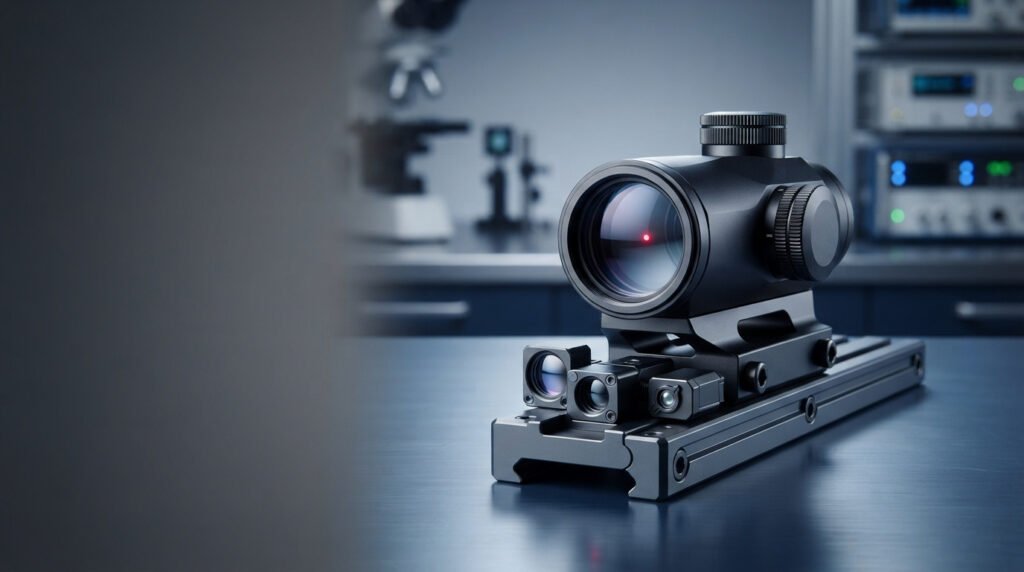
A red dot scope is an optical sighting device that uses an LED to project a glowing dot (or similar reticle shape) onto a specially coated lens, allowing the shooter to keep both eyes open while aiming. Unlike magnified scopes, most red dot units show the target at true size, which makes them popular for close-to-mid range shooting, home defense setups, and fast-paced competition. Key factors that separate a reliable unit from a disappointing one include battery life, water resistance, dot size (measured in MOA), and how well the housing holds zero under recoil.
Why So Many Shooters Switched Away from Iron Sights
For decades, iron sights were the default option simply because there wasn’t a practical alternative. That changed once battery-powered reflex optics became affordable enough for everyday shooters rather than just military and law enforcement budgets.
The appeal isn’t complicated. With iron sights, a shooter has to align three points — rear sight, front sight, and target — all while managing eye focus between them. A red dot scope collapses that into a single focal plane. The dot appears to float on the target itself, so there’s nothing to align beyond pointing the muzzle where the dot lands.
That single change shaves real time off target acquisition, which is why red dot scope reviews so often mention faster follow-up shots as the standout benefit. It’s not marketing fluff — it’s simply how the optics reduce the number of steps between “see target” and “shot fired.”
How a Red Dot Scope Actually Works
The LED and Reticle Projection
Inside the housing, a small LED emits light toward an angled lens coated with a partially reflective film. That coating reflects the LED’s wavelength back toward the shooter’s eye while letting most other light pass straight through, which is why the lens still looks clear even though it’s reflecting a bright dot.
Parallax and Eye Relief
One detail that trips up first-time buyers is parallax. A properly designed red dot scope is engineered to be largely parallax-free at typical engagement distances, meaning the dot stays roughly on target even if your eye isn’t perfectly centered behind the lens. This is part of why these optics tolerate a less-than-perfect cheek weld far better than a magnified scope does.
Unlimited eye relief is another practical advantage. Because there’s no magnification to manage, the shooter can position their head at almost any comfortable distance from the optic without losing the sight picture, which matters a lot when shooting from awkward positions.
Types of Red Dot Scope Designs
Tube-Style Reflex Sights
Tube-style units look closest to a traditional scope, with a cylindrical housing surrounding the lens on both ends. This design tends to offer better protection for the lens itself, which is one reason it remains popular for rifles that see rough handling in the field.
Open Reflex Sights
Open-style reflex sights ditch the tube in favor of a single exposed lens mounted on a small emitter body. The trade-off is a wider field of view and typically lighter weight, at the cost of slightly more lens exposure to weather and debris. This style has become especially common on handguns, where slide-mounted optics need to stay compact.
Enclosed Emitter Sights
Enclosed emitter designs fully surround the LED and lens in a sealed housing, protecting the internal components from dust, rain, and impact. These units have gained ground quickly among competitive shooters who need an optic that survives years of holster wear without the emitter getting knocked out of alignment.
Holographic Sights (A Close Cousin)
Holographic sights are often mentioned in the same breath as a standard red dot scope, but the underlying technology differs. Rather than reflecting an LED off a coated lens, holographic units project a laser-generated reticle image through the glass. They tend to cost more and draw more battery power, but many shooters find the reticle easier to see against cluttered backgrounds.
Specs That Actually Matter When Choosing a Red Dot Scope
Dot Size and MOA
MOA (minute of angle) describes how much of the target the dot covers at a given distance. A smaller MOA dot, such as 2 MOA, covers less of the target and suits more precise shot placement at distance. Larger dots, like 6 MOA or above, are easier to pick up quickly for close-range, fast-moving scenarios but obscure more of a distant target.
Battery Life and Power Management
Battery runtime varies enormously between models, and this is one spec where marketing claims deserve a skeptical eye. Many modern units include a “shake-awake” or motion-activated feature that keeps the optic off until movement is detected, which extends real-world battery life well beyond what constant-on operation would allow.
Durability and Weatherproofing
A red dot scope destined for hunting or duty use needs to survive temperature swings, moisture, and the occasional drop. Housing material, seal quality, and the manufacturer’s recoil rating all factor into how well a unit holds zero over years of use rather than just during the first range session.
Mounting Compatibility
Not every red dot scope fits every firearm out of the box. Footprint compatibility — whether an optic uses a specific mounting pattern shared across brands or a proprietary one — determines how easily a shooter can swap optics or find aftermarket mounting plates later on.
Common Mistakes Buyers Make
Chasing Brand Name Over Fit
It’s tempting to buy whatever optic a favorite reviewer uses, but the “best” red dot scope on paper isn’t automatically the best fit for a specific firearm or shooting style. A large open-reflex unit built for a rifle rail looks and performs very differently once squeezed onto a compact pistol slide.
Ignoring Co-Witness Height
Co-witnessing refers to how a red dot’s reticle lines up with a firearm’s iron sights when both are visible through the optic window. Buyers who skip this consideration sometimes end up with a mounting height mismatch that makes backup iron sights nearly useless in a pinch.
Underestimating Glass Quality
Two optics can share identical MOA and battery specs on paper while looking noticeably different through the lens. Lens coating quality affects glare, tint, and how crisp the dot appears against a bright background — differences that rarely show up in a spec sheet comparison.
Maintenance Habits That Extend a Red Dot Scope’s Lifespan
Routine care matters more than most buyers expect going in. Wiping the lens with a proper optics cloth rather than a shirt sleeve prevents the coating from developing fine scratches that gradually degrade dot clarity.
Battery swaps deserve a calendar reminder rather than a “wait until it dies” approach, since some units lose brightness gradually before failing outright, which can be dangerous to discover mid-hunt or mid-match. Checking zero periodically — not just after a hard bump, but on a regular schedule — also catches drift before it becomes a problem in the field.
How to Match a Red Dot Scope to Your Shooting Style
Someone running drills at a competition range has very different priorities than a hunter glassing a tree line at dawn. Competition shooters typically favor larger dot sizes and enclosed emitters that shrug off holster wear, since speed and durability under repeated draws matter more than long-range precision.
Hunters, on the other hand, often lean toward tube-style units with strong weather sealing and dependable battery life, since a dead optic on opening morning is a far bigger problem than shaving a tenth of a second off target acquisition. Home defense setups usually split the difference, prioritizing a wide field of view and a dot bright enough to see clearly under low indoor light.
What You’re Really Paying For at Different Price Points
Red dot pricing spans an enormous range, from budget options under fifty dollars to premium units costing several hundred. Understanding what actually changes as price climbs helps buyers avoid both overspending and, more commonly, underspending on a critical piece of gear.
Entry-level units often cut corners on glass quality first, since that’s the component least visible on a spec sheet but most noticeable during actual use. A cheap lens coating can introduce a blue or green tint that makes distinguishing target details harder in certain lighting conditions, even if the dot itself looks fine in a well-lit store display.
Mid-range optics typically improve battery management systems and add better environmental sealing, which matters most to buyers who’ll actually use the optic outdoors rather than keep it in a safe. This price tier is often where the best value sits for recreational shooters and hunters who don’t need duty-grade durability.
Premium optics justify their price through manufacturing tolerances that keep zero locked in through heavy recoil cycles, extreme temperature swings, and repeated impacts. Professional users — law enforcement, military contractors, serious competitors — tend to gravitate toward this tier precisely because optic failure at the wrong moment carries consequences that go well beyond inconvenience.
Field-Testing Before You Commit
Reading spec sheets only goes so far. Whenever possible, handling a red dot scope in person — or at minimum, renting range time with one — reveals things no listing can fully convey.
Dot clarity against different backgrounds is worth checking specifically. A dot that looks crisp against a plain white paper target can behave very differently against a busy woodland backdrop or a bright overcast sky, and this variation is almost impossible to judge from photos alone.
Weight and balance matter more than most first-time buyers expect, particularly for anyone planning to carry a firearm for extended periods. An optic that feels negligible on a bench can shift a rifle’s balance point noticeably once mounted, affecting how naturally it points during fast target transitions.
Zeroing and Sight-In Basics
Getting a red dot scope properly zeroed is a separate skill from simply mounting one, and it’s a step some new owners rush through or skip entirely. Zeroing means adjusting windage and elevation so the dot’s point of aim matches the bullet’s actual point of impact at a chosen distance.
Most manufacturers recommend an initial bore-sighting step before live fire, which gets the dot roughly aligned and saves ammunition during the fine-tuning process at the range. From there, a standard zeroing process involves firing small groups, checking impact relative to the dot, and making incremental adjustments using the turret clicks — each typically representing a fraction of an inch of movement at a set distance.
It’s worth re-zeroing after any significant impact, a long storage period, or switching ammunition types, since point of impact can shift subtly for reasons that aren’t always obvious from a quick visual check of the mount.
Red Dot Scope Accessories Worth Considering
A handful of accessories can meaningfully improve how a red dot scope performs day to day, even though they’re easy to overlook during the initial purchase.
Protective lens covers guard against scratches and debris during transport or storage, which matters since even minor lens damage can distort the dot or degrade clarity over time. Magnifiers, mentioned earlier as a way to extend effective range, flip up or slide behind many red dot units to add 3x or higher magnification when needed without permanently committing to a magnified-only setup.
Riser mounts help address co-witness height issues discussed earlier, letting shooters fine-tune how the optic sits relative to iron sights or a shooter’s natural cheek weld on a given platform. None of these additions are strictly necessary, but they often solve specific frustrations that only become obvious after spending real time behind the optic.
Legal and Safety Considerations
Regulations around firearm accessories, including optics, vary by jurisdiction and can change over time. Buyers should confirm current local laws before purchasing or installing any sighting device, since rules governing magnification limits, hunting seasons, or specific accessory types differ significantly between regions.
Safety fundamentals also don’t change just because an optic makes target acquisition faster. Proper firearm handling, secure storage, and adherence to range safety protocols remain essential regardless of how advanced the mounted equipment is. Anyone new to optics-equipped firearms benefits from supervised range time or a qualified instructor before relying on new gear in a real-world scenario.
Conclusion
A red dot scope isn’t just a smaller, cheaper version of a magnified rifle scope — it solves a genuinely different problem. By collapsing the sight picture into a single focal plane, it lets shooters acquire targets faster and more instinctively than iron sights ever allowed.
The right choice ultimately comes down to matching the optic’s design, durability, and dot characteristics to how it will actually be used, rather than chasing the highest spec numbers on a shelf tag. A little research upfront saves a lot of frustration — and wasted money — down the road.
Frequently Asked Questions
What’s the difference between a red dot scope and a holographic sight? A red dot scope reflects LED light off a coated lens, while a holographic sight projects a laser-generated reticle through the glass. Holographic units often handle cluttered backgrounds better but typically cost more and use more battery power.
Does a red dot scope work for long-range shooting? Most red dot units are optimized for close-to-mid range use since they don’t offer magnification. Shooters wanting extended range often pair a red dot with a magnifier or choose a low-power variable optic instead.
How long do red dot scope batteries actually last? Battery life varies widely by brand and settings, but many modern units with motion-activated power saving can run for months or even years on a single battery under normal use.
Is a bigger MOA dot always better for beginners? Not necessarily. Larger dots are easier to see quickly, which helps at close range, but they can obscure more of a distant target, making precise shot placement harder as distance increases.
Can a red dot scope be mounted on a handgun? Yes, many open-reflex and enclosed emitter designs are specifically built for slide-mounted use on handguns, though mounting requires a compatible footprint or a milled slide.