TL;DR
A telescopic sight is an optical device that magnifies distant targets and improves aiming accuracy for shooting sports, hunting, and long-range observation. Choosing the right scope depends on magnification power, lens diameter, reticle type, and intended use. This guide walks through everything you need to know before buying one, from how the optic works to the most common mistakes buyers make.
Quick Answer
A telescopic sight is an optical aiming device mounted on a firearm or air rifle that uses a series of lenses to magnify a distant target, making it easier to aim accurately over longer distances. It typically consists of an objective lens, an ocular lens, an internal reticle, and adjustment turrets for windage and elevation. The right scope depends on your shooting distance, lighting conditions, and the type of activity — hunting, target shooting, or airgun use.
Introduction
If you have ever tried to hit a distant target with just your naked eye, you already know how difficult it can be. Small movements, poor lighting, and distance all work against accuracy.
This is exactly the problem a telescopic sight was designed to solve. It is one of the most important accessories for anyone serious about shooting sports, hunting, or precision aiming. A good scope does not just make objects appear closer — it also helps you align your eye, the reticle, and the target in a single, clear sightline.
In this guide, we will explain what this optical device is, how it works, the different types available, and the key factors you should consider before buying one. Whether you are a beginner or looking to upgrade your current setup, this article will help you make an informed decision.
What Is a Telescopic Sight?
A telescopic sight is an optical instrument that combines a magnifying lens system with a reticle, or crosshair, used for precise aiming. It is mounted on top of a firearm, air rifle, or crossbow using a rail or mount system.
Unlike simple iron sights, which rely on aligning two fixed points, this type of scope brings the target visually closer while keeping the aiming point sharp and centered. This makes a significant difference in accuracy, especially at medium to long distances.
Most units are built with multiple glass lenses, precision-engineered tubes, and adjustment knobs that allow the shooter to fine-tune their point of aim. The quality of these internal components directly affects clarity, brightness, and durability.
How Does a Telescopic Sight Work?
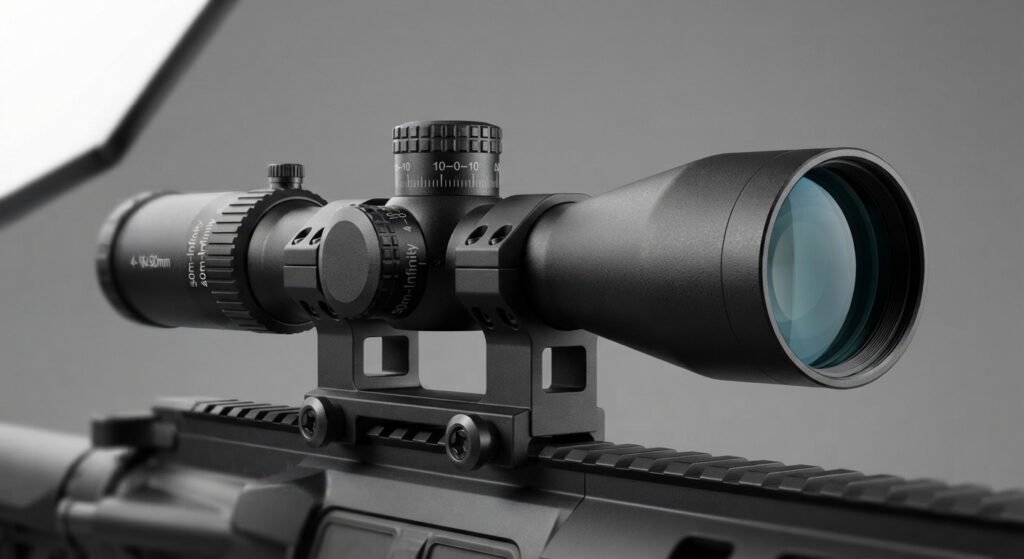
At its core, this optic works like a small refracting telescope. Light enters through the objective lens at the front, travels through a series of internal lenses, and exits through the ocular lens near the shooter’s eye.
As the light passes through, the image is magnified and focused onto the reticle, which appears to sit directly on the target. This optical alignment is what allows for such precise aiming compared to unaided eyesight.
Key Components of the Optic
Every telescopic sight, regardless of brand or price point, generally includes the following parts:
- Objective lens – the front lens that gathers light and forms the initial image
- Erector system – internal lenses that flip and stabilize the magnified image
- Reticle – the crosshair or aiming point visible inside the scope
- Ocular lens – the rear lens the shooter looks through
- Windage and elevation turrets – dials used to adjust the point of impact
- Tube body – the housing that holds all internal components together
Understanding these parts helps buyers compare products more effectively, since manufacturers often highlight lens coatings, tube material, and turret precision as selling points.
Types of Scopes and Sighting Optics
Not all riflescopes are built the same way, and the right one depends heavily on your intended use.
Fixed Power vs Variable Power
A fixed power scope has a single, unchangeable magnification level, such as 4x or 6x. These optics are generally simpler, more durable, and often more affordable, making them a good choice for beginners or for activities where distance stays fairly consistent.
A variable power telescopic sight, on the other hand, allows the shooter to adjust magnification within a range, such as 3-9x or 4-16x. This flexibility is useful for hunters and shooters who deal with changing distances, since they can zoom in for long shots and zoom out for closer, faster targets.
Sighting Optics for Hunting, Sport Shooting, and Airguns
Hunting scopes are usually designed with durability, weather resistance, and low-light performance in mind, since hunters often shoot at dawn or dusk.
Sport shooting optics, used in competitive target shooting, tend to prioritize precise adjustment turrets and high clarity at fixed distances. Airgun scopes are built slightly differently to handle the unique recoil pattern of air rifles, which moves both forward and backward unlike a firearm’s single recoil direction.
Choosing the correct category of telescopic sight for your specific activity will save you money and prevent performance issues down the line.
Key Factors to Consider When Buying a Telescopic Sight
Selecting the right optic is not just about picking the highest magnification available. Several technical and practical factors should guide your decision.
Magnification Power
Magnification determines how much closer a target appears. While higher magnification sounds appealing, it is not always better. Higher power narrows your field of view and can make it harder to track moving targets.
For most general-purpose use, a moderate range scope, such as 3-9x, offers a good balance between versatility and clarity.
Objective Lens Diameter
The objective lens diameter, measured in millimeters, affects how much light enters the optic. A larger objective lens generally allows a brighter image, which is especially useful in low-light conditions such as early morning hunts.
However, larger lenses also add weight and may require higher mounts.
Reticle Type
The reticle is the aiming reference inside the sighting optic, and it comes in several styles, including duplex, mil-dot, and illuminated reticles. Illuminated reticles are particularly helpful in low-light environments, while mil-dot reticles assist with range estimation for long-distance shooting.
Tube Diameter and Mounting Compatibility
These optics commonly come in 1-inch or 30mm tube diameters. This measurement matters because it must match the rings or mount you plan to use. A mismatched tube size can lead to instability or an inability to mount the scope at all.
Durability and Weatherproofing
Since a telescopic sight is often used outdoors, features like waterproofing, fog-proofing, and shockproof construction are essential. Nitrogen or argon-purged units resist internal fogging caused by temperature changes, which is a common issue with lower-quality optics.
Eye Relief
Eye relief refers to the distance between your eye and the ocular lens while still maintaining a full, clear field of view. This is particularly important for firearms with stronger recoil, as insufficient eye relief can lead to discomfort.
A scope with generous eye relief adds both safety and shooting comfort.
Telescopic Sight vs Other Optical Sights
Buyers are often unsure how this type of optic compares to alternatives like red dot sights or reflex sights.
A red dot sight typically offers no magnification and is designed for fast, close-range target acquisition, making it popular in tactical or self-defense scenarios. A telescopic sight, by contrast, is built for magnified, precision aiming at medium to long distances.
Reflex sights sit somewhere in between, offering quick target acquisition with minimal parallax, but again without the magnification benefits of a true riflescope. For hunters and long-range shooters, this remains the preferred choice due to its superior clarity and range capability.
How to Mount and Use a Telescopic Sight Safely
Proper mounting is just as important as choosing the right scope in the first place. A poorly mounted unit can shift under recoil, leading to inconsistent accuracy and, more importantly, safety concerns.
Generally speaking, mounting involves securing the rings to the firearm’s rail system, aligning the reticle level with the barrel, and adjusting eye relief for a comfortable, full sight picture. After mounting, the optic needs to be zeroed, a process where the point of aim is calibrated to match the point of impact at a specific distance.
Because mounting and zeroing procedures vary by firearm type, model, and regional regulations, it is best to follow the manufacturer’s official instructions or have the setup performed by a qualified professional or licensed range instructor. Always follow local firearm laws and safety regulations when purchasing, mounting, or using any telescopic sight.
Maintenance Tips for a Long-Lasting Scope
A quality telescopic sight is an investment, and proper care extends its lifespan significantly.
Keep the lenses clean using a proper optical lens cloth rather than clothing or paper towels, which can scratch the coating. Store the unit in a padded case when not in use, and avoid exposing it to extreme temperature changes whenever possible, even though most modern optics are built to resist fogging.
Periodically check that the mounting screws remain tight, since vibration from repeated use can gradually loosen them. Routine inspection helps catch small issues before they affect your accuracy.
Common Mistakes to Avoid When Choosing a Telescopic Sight
Many first-time buyers make avoidable mistakes when purchasing a scope. One common error is prioritizing magnification over glass quality, resulting in an optic that zooms in far but produces a dim or blurry image.
Another mistake is ignoring tube diameter compatibility with existing mounts, leading to unnecessary additional purchases. Some buyers also overlook eye relief, only to discover discomfort or reduced field of view once the unit is actually mounted and used.
Finally, choosing a sighting optic that does not match the intended activity, such as using a hunting-focused telescopic sight for fast-paced sport shooting, can limit overall performance.
Conclusion
A telescopic sight can dramatically improve accuracy, whether you are hunting, competing in sport shooting, or simply enjoying target practice. The key to choosing the right one lies in understanding your specific needs: the distances you will be shooting, the lighting conditions you will face, and the type of firearm or air rifle you are using.
Rather than focusing solely on magnification numbers, pay attention to lens quality, reticle type, durability, and mounting compatibility. A well-chosen scope, properly mounted and maintained, will serve reliably for years and noticeably improve your overall shooting experience.
Frequently Asked Questions
1. What is the difference between a telescopic sight and a regular scope?
The terms are often used interchangeably. A telescopic sight is simply the technical name for what most people casually refer to as a “scope.”
2. What magnification is best for a beginner?
A variable power scope in the 3-9x range is generally recommended for beginners, since it offers flexibility across different distances without being overly complicated to use.
3. Can a telescopic sight be used on an air rifle?
Yes, but it is important to choose an optic specifically rated for airguns, since their recoil pattern differs from that of firearms and can damage units not built to withstand it.
4. How often should a scope be re-zeroed?
It is good practice to check zero after any significant impact, before hunting season, or if you notice a consistent shift in accuracy, even if the telescopic sight has not visibly moved.
5. Do more expensive scopes make a big difference?
Generally, yes. Higher-priced units typically use better glass, more durable materials, and more precise adjustment turrets, which translates into clearer images and more reliable accuracy over time.