
TL;DR
A motorcycle LED projection light is a small, sealed lamp that casts a logo or pattern onto the ground, usually when the bike is parked or idling. Its quality depends on optics, brightness, waterproofing, and heat control far more than on price. Before buying any motorcycle LED projection light, check your bike’s wiring and local rules, and test a sample before committing to a bulk order.
Quick Answer
A motorcycle LED projection light is a compact lighting module that uses an LED and a lens system to cast a logo, pattern, or text onto the road surface near the bike. Most run on a 12V supply and use either film-based (gobo) or micro lens array (MLA) optics. When comparing any motorcycle LED projection light, look at image sharpness, brightness, ingress protection, vibration resistance, mounting design, and the lighting rules in your region.
Introduction
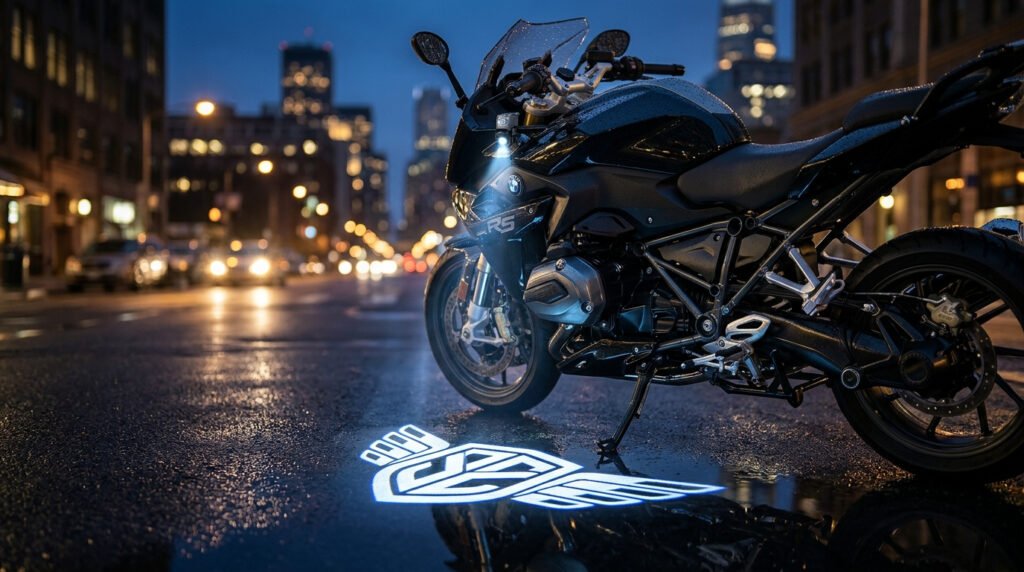
Walk past a parked motorcycle at night and you may notice a small, crisp emblem glowing on the pavement beside it. It is a tiny detail, but it changes how the bike feels. That effect comes from a motorcycle LED projection light, a compact module that has become a popular accessory for custom builds, touring bikes, and brand-focused fleets.
The appeal is easy to understand. Riders enjoy the personal touch. Dealers and manufacturers like a branded detail that costs little and looks great in photos. Some owners also appreciate a bit of extra light on the ground when stepping off the bike in a dark car park.
The market is crowded, though, and two units that look identical in a product photo can perform very differently. One throws a razor-sharp logo, while another produces a blurry smear. One survives a rainy season, while another fogs up within weeks. Knowing what sits inside a motorcycle LED projection light makes it much easier to separate well-made products from disappointing ones.
This guide explains what these lights are, how they work, the main optical types, and the features that matter. It also covers installation basics, legal considerations, maintenance, and how brands can approach custom logo projects. By the end, you should be able to judge a motorcycle LED projection light with confidence rather than guesswork.
What Is a Motorcycle LED Projection Light?
A motorcycle LED projection light is a small, sealed lamp that projects a defined image onto the ground. Most often that image is a logo, a line of text, or a decorative pattern. The unit is built around an LED light source, a way of forming the image, and a lens that focuses it at a chosen distance.
You will see these products sold under many names: ground projection light, welcome light, puddle light, logo projector, and shadow light. The terms overlap, and sellers use them loosely. What they share is one job, which is turning a small LED into a recognisable shape on the surface below.
It helps to be clear about what this product is not. A headlight or auxiliary driving light exists to illuminate the road so the rider can see. A motorcycle LED projection light is mainly decorative and brand-oriented. It is usually too small and too dim to serve as a driving lamp, and it should never be treated as one.
Why Riders and Brands Use a Motorcycle LED Projection Light
Personalisation
Many riders customise their bikes in small ways, through grips, mirrors, paint, or badges. A motorcycle LED projection light fits naturally into that habit. It adds identity without changing the bike’s structure or its appearance during the day.
Brand Presence
For manufacturers, dealerships, and rental fleets, a motorcycle LED projection light offers a quiet branding touch. A logo on the ground at a showroom, a rally, or a night-time meetup draws attention without any extra signage. Because the image appears where people naturally look, it tends to be noticed.
Practical Convenience
A motorcycle LED projection light mounted low can make it easier to see where you are stepping, spot a puddle, or find the side stand. This benefit is modest and depends on brightness and mounting position, but it is a pleasant side effect rather than the main reason to buy.
How a Motorcycle LED Projection Light Works
Every motorcycle LED projection light follows the same basic path. Light is generated, shaped into an image, and focused on the ground. The differences between products come from how well each of those steps is done.
The Core Components
The LED supplies the light, usually a low-power white source. A small driver circuit converts the bike’s supply into a steady current so the LED does not flicker or burn out early. An image-forming element decides what shape appears, whether that is a printed film, an etched plate, or an array of microscopic lenses. A projection lens focuses that image at a set distance. Finally, a housing holds everything in alignment, seals out water and dust, and carries heat away from the LED.
If you think of a motorcycle LED projection light as a miniature slide projector built to survive rain and vibration, you are close to the right picture.
Gobo (Film or Slide) Projection
The traditional approach places a small transparent slide, often called a gobo, between the LED and the lens. Light passes through the pattern, and the lens focuses it onto the ground. The idea is old and well proven, which is why this type of motorcycle LED projection light is common and affordable.
Gobo designs are flexible, since changing the pattern means changing the slide. The weaknesses are mostly practical. The optical path needs some length, so the module can be thicker. Cheaper film may fade or warp under heat and ultraviolet exposure. Glass or metal patterns last longer but cost more.
Micro Lens Array (MLA) Projection
An MLA design replaces the single slide and large lens with a grid of tiny lenses. Each tiny lens forms a small copy of the image, and those copies overlap on the ground to build one bright, even picture. In simple terms, many small lenses cooperate instead of one lens doing all the work.
The practical advantages can include a slimmer module and more uniform brightness across the image. Whether those advantages appear in a given product depends heavily on the quality of the optical design and manufacturing. A well-made MLA motorcycle LED projection light produces a clean, consistent logo, while a poor one shows uneven edges or hot spots.
Gobo vs. MLA at a Glance
| Feature | Gobo (film or glass slide) | MLA (micro lens array) |
|---|---|---|
| Basic principle | One slide and one projection lens | Grid of tiny lenses forming overlapping images |
| Module thickness | Often thicker | Often slimmer |
| Image uniformity | Good with quality optics | Typically even when well designed |
| Custom patterns | Flexible, easy to change slides | Requires custom array or mask design |
| Heat and fade risk | Higher with low-grade film | Depends on materials used |
| Typical cost | Usually lower | Varies, often higher |
Neither type of motorcycle LED projection light is automatically better. The right choice depends on the space available, the image quality you expect, and how much customisation you need.
Where to Mount a Motorcycle LED Projection Light
Mounting position shapes the result as much as the optics do. Common locations include the underside of a mirror housing, a lower fairing panel, the frame near the footrest, and the lower rear section of the bike. The best spot depends on your motorcycle’s layout.
Height and angle change how the image looks. A unit mounted higher produces a larger but dimmer image, while a lower one gives a smaller, brighter, sharper result. Tilting it changes where the image lands and whether it stretches. Most units are designed for a specific projection distance, so check what the manufacturer recommends before choosing a position.
Keep the motorcycle LED projection light away from hot components such as exhausts and from moving parts such as suspension and wheels. Clear space around the lens ensures the image is not blocked by bodywork, and a firm mount stops the image from shaking. Dirt and road spray collect on low positions, so expect a bit more cleaning there.
Key Features to Evaluate in a Motorcycle LED Projection Light
Image Sharpness and Focus
Sharpness is the first thing to judge. A good motorcycle LED projection light produces clean edges and legible shapes at its intended distance. Ask for real photos taken in realistic conditions rather than rendered images, and look at the edges of letters and lines. Blur or colour fringing around the edges suggests weak optics.
Brightness and Ambient Light
Every motorcycle LED projection light works best in low light. In bright daylight or under strong streetlights, the image can wash out no matter how good the unit is. Be wary of exaggerated brightness claims, and look for products that state their output honestly and describe the conditions where the image is clearest.
Waterproofing and Dust Protection
Motorcycles live outdoors, so ingress protection matters. The IP rating describes resistance to dust and water. As a rough guide, the first digit covers solids, and a 6 means dust-tight. The second digit covers water, where 5 indicates protection against water jets and 7 indicates temporary immersion under defined conditions. A motorcycle LED projection light rated IP67 is generally suited to rain and splash exposure, but the rating only means something if it was tested and the cable entry is properly sealed. Ask how the rating was verified.
Vibration Resistance
Engines and rough roads shake everything. A motorcycle LED projection light has to survive constant vibration, and typical failures include loose lenses, cracked solder joints, and shifting alignment. Look for secure lens retention, potted or protected electronics, and sturdy brackets. Rubber isolation at the mounting point can help absorb vibration.
Heat Management
LEDs lose efficiency and life when they run hot. Aluminium housings with fins or a good thermal path help spread heat. Since a motorcycle LED projection light is small and sealed, thermal design deserves real attention. A module that looks great on day one but overheats after an hour may fade, flicker, or fail early.
Voltage and Power Compatibility
Most motorcycles use a 12V electrical system, and most motorcycle LED projection light models are designed for it. Confirm the input range, current draw, and whether the driver handles voltage spikes, since motorcycle electrical systems are not always perfectly steady. A low-draw unit also adds little load to the battery and charging system.
Lens Material
Glass lenses tend to resist scratches and yellowing better and often give a crisper image. Plastic lenses are lighter and cheaper but can scratch or discolour with time and sunlight. For outdoor use over several seasons, ask which lens material your motorcycle LED projection light uses.
Housing and Finish
Aluminium alloy housings with anodised or powder-coated finishes resist corrosion well. Check the quality of seals, screws, and cable glands, since moisture usually enters through the weakest point rather than through the housing itself.
Types of Motorcycle LED Projection Light by Use
| Type | Typical purpose | Things to consider |
|---|---|---|
| Logo projector | Displays a brand or emblem on the ground | Image sharpness, custom artwork, brightness |
| Welcome or puddle light | Lights a small area near the bike | Mounting height, switching method |
| Shadow or pattern light | Decorative effects such as lines or shapes | Local rules on colours and patterns |
| Custom OEM projector | Branded accessory for a manufacturer | Design support, testing, minimum order quantity |
Installing a Motorcycle LED Projection Light: What to Know
Adding a motorcycle LED projection light involves a vehicle’s electrical system, so this section stays general on purpose. Always follow the manufacturer’s instructions and your motorcycle’s service documentation, and consider a qualified technician if you are not experienced with vehicle electrics.
In broad terms, a safe installation of a motorcycle LED projection light uses a properly protected circuit, secure and waterproof connections, and neat routing that avoids heat, sharp edges, and moving parts. The wiring should switch the motorcycle LED projection light off when it should be off, so it does not keep drawing power when the bike is parked for long periods.
Some modern motorcycles monitor their electrical circuits, and adding accessories can in some cases trigger warnings or affect warranty terms. It is worth reading your owner’s manual and speaking with a dealer or installer before connecting anything. After installation, check that the image lands where you expect and that nothing rubs, heats, or loosens during a test ride in a safe environment.
Legal and Safety Considerations
Rules about vehicle lighting differ widely between countries, regions, and even cities. A motorcycle LED projection light that is perfectly fine for static display at a show may be treated differently when used on public roads.
Points that often come up include whether projecting images onto the road while the vehicle is moving is allowed, whether certain colours are restricted because they resemble emergency or traffic signals, and whether the light could distract or dazzle other road users. Some places treat ground projection as additional lighting that must meet specific requirements, while others have little explicit guidance.
Because the details change and depend on where you ride, check with your local transport or vehicle authority before using a motorcycle LED projection light in traffic. As a general safety habit, many owners limit use of a motorcycle LED projection light to when the bike is stationary, keep colours neutral, and avoid anything that could mislead other drivers. This guide does not replace legal advice, and the final responsibility lies with the owner or operator.
Maintenance and Troubleshooting
A motorcycle LED projection light needs little care, but a few habits keep it working well. Wipe the lens with a soft, clean cloth to remove dust and road film. Avoid harsh solvents that could damage coatings or seals. Check periodically that mounting bolts are tight and that the wiring has not rubbed against anything.
If your motorcycle LED projection light starts to misbehave, the symptom often points to the cause:
- Flickering: often a loose connection or unstable power supply.
- Blurry image: commonly a dirty lens, a shifted mount, or a change in mounting height.
- Dim or fading image: possibly ageing film, heat stress, or LED wear.
- Moisture or fogging inside: usually a damaged seal or a poorly sealed cable entry, which typically means replacing the unit.
- Image off-target: the bracket has moved or the angle needs to be reset.
If a problem keeps returning, contact the supplier with clear photos and details of when it happens. A reputable seller will respond with real troubleshooting rather than generic replies.
Custom Motorcycle LED Projection Light for Brands and OEM Buyers
Companies that want to put their own emblem on a product need to think about design as well as hardware. A custom motorcycle LED projection light starts with artwork, and not every logo projects well.
Simple, bold shapes with good contrast tend to look best. Very thin lines, tiny text, and fine gradients usually blur or disappear at projection distance. Providing the logo as clean vector artwork helps the optical designer prepare the pattern, and orientation is handled during design so the final image appears the right way round on the ground.
A good process for developing a motorcycle LED projection light normally includes confirming the target projection distance and image size, building a sample, and reviewing a real projected image before approving production. Testing for water resistance, vibration, and temperature behaviour is worthwhile, especially for products that will be sold under your brand name.
It also helps to work with a supplier that handles optical design, structural design, and coating in one place, since the lens, housing, and pattern all affect each other. Ask what compliance documents are available for your target market, and keep in mind that vehicle lighting approvals depend on the country. Finally, discuss minimum order quantities, lead times, and confidentiality for your artwork early, so there are no surprises later.
Common Mistakes to Avoid
The most common mistake is buying a motorcycle LED projection light on brightness claims alone. A very bright number on a listing means little if the image is soft or the unit overheats. Sharpness, thermal design, and sealing usually matter more over time.
Another mistake is ignoring the mounting distance. Many disappointing results come from installing a motorcycle LED projection light at a height or angle it was never designed for. Check the focus distance first, then choose the position.
A third error is skimping on installation. Loose connections and unsealed joints cause most reliability complaints, and they are avoidable. Finally, some buyers overlook local rules until after installation. Checking in advance saves trouble later.
A Simple Buying Checklist
Before ordering any motorcycle LED projection light, it helps to run through a short list:
- Is the image sharp in real photos taken at the intended distance?
- Is the IP rating stated, and is there a way to confirm it?
- Does the housing manage heat well?
- Is the lens glass or good-quality plastic?
- Does the input voltage match your motorcycle?
- Is the mounting hardware sturdy and adjustable?
- Can the supplier explain warranty and support clearly?
- Do you know the local rules for use?
If a seller cannot answer most of these, keep looking.
Conclusion
A motorcycle LED projection light is a small component with a surprisingly large visual effect. When it is well made, it adds personality to a bike or a consistent brand signature to a product line. When it is poorly made, it becomes an unreliable accessory that fades, fogs, or blurs.
The difference comes down to details you can check: the optical design, the quality of the lens, thermal control, sealing, and sensible mounting. Understanding the gobo and MLA approaches helps you ask better questions, and knowing the legal landscape helps you use the light responsibly.
If you are buying a motorcycle LED projection light for yourself, start by choosing the optical type and mounting position, then verify image quality and waterproofing before you pay. If you are buying as a brand, request samples, test them under real conditions, and confirm design and compliance support before scaling up. In both cases, a careful choice now will pay off in a clean, dependable image for years to come.
FAQs
What is a motorcycle LED projection light?
A motorcycle LED projection light is a compact, sealed lamp that uses an LED and a lens system to project a logo, text, or pattern onto the ground near a motorcycle. It is mainly decorative and brand-oriented, and it is not a replacement for headlights.
How does a motorcycle LED projection light work?
An LED produces light, a pattern element such as a film slide or a micro lens array shapes it into an image, and a projection lens focuses that image on the ground. A driver circuit controls the power, and a sealed housing protects the parts from water, dust, and vibration.
Is a motorcycle LED projection light waterproof?
Many are designed to be, but it depends on the product. Look for a stated IP rating such as IP65 or IP67, and check that cable entries and seals are well made. A rating on paper helps only if the construction supports it.
Is it legal to use a motorcycle LED projection light on the road?
Rules vary by country and region. Some places restrict projecting images while moving, limit certain colours, or regulate additional lighting. Check with your local transport or vehicle authority, and consider using the light only while stationary unless you are sure it is permitted.
What is the difference between gobo and MLA projection lights?
A gobo light projects through a single slide using one lens, while an MLA light uses a grid of tiny lenses whose images overlap to form the picture. MLA designs can be slimmer and more uniform, while gobo designs are often simpler and more affordable. The best choice depends on your space, budget, and image-quality needs.