
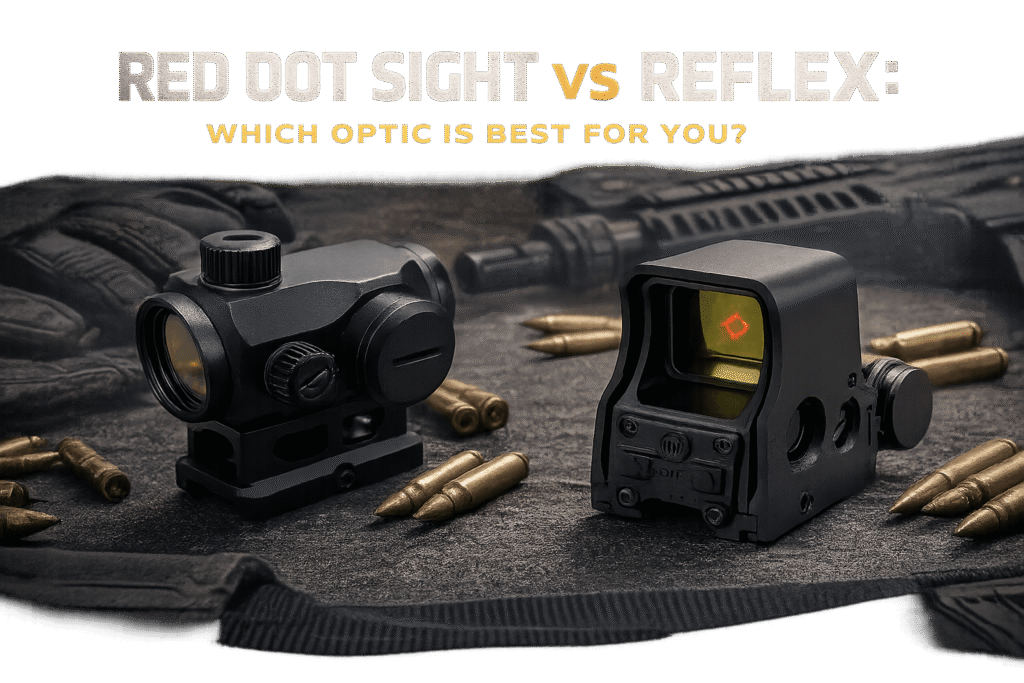
In the world of optoelectronics and shooting sports, few debates are as common as red dot sight vs reflex. If you are looking to upgrade your firearm, the terminology can get confusing quickly. Is a reflex sight a red dot? Are all red dots reflex sights?
At ARVR Optical, we specialize in high-precision optics. In this guide, we will break down the technical principles and practical applications of these sights in simple, easy-to-understand English so you can make an informed purchase.
Terminology 101: Red Dot Sight vs Reflex
To understand the difference between reflex and red dot sight, we first need to clear up the naming convention.
-
Red Dot Sight: This is a broad “umbrella” category. Any non-magnified optic that uses a glowing red dot as an aiming point is technically a red dot sight.
-
Reflex Sight: This is a specific type of technology used to create that red dot. It uses a lens to reflect light from an LED back to your eye.
In the industry, when people compare red dot sight vs reflex sight, they are usually comparing Tube-Sights (closed) to Open Reflex Sights (exposed).
What is a Reflex Sight?
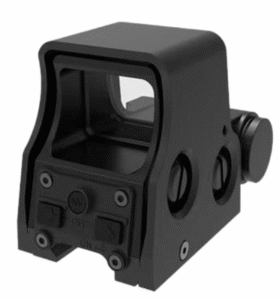
A reflex sight works on a simple but brilliant optoelectronic principle. An LED located behind a lens projects a beam of light onto a specially coated glass pane. This glass reflects the light back to your eye, showing you a dot (or reticle) that stays on your target even if you move your head.
Key Features of Reflex Sights:
-
Open Design: Most reflex sights have a single lens and an open frame.
-
Unlimited Eye Relief: You can place your eye at any distance from the sight.
-
Parallax Free: Usually, where the dot rests is where the bullet hits, regardless of your eye angle.
What is a “Tube-Style” Red Dot Sight?
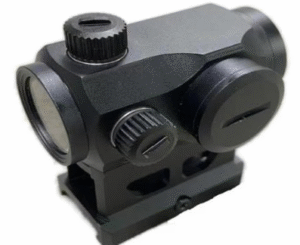
While it uses reflex technology, a “Tube” red dot looks like a miniature telescope. The LED and the reflecting glass are housed inside a sealed cylinder. This design is what most veterans and professionals mean when they refer to a “traditional” red dot.
Key Features of Tube Sights:
-
Enclosed Optics: The light source is protected inside a tube with two layers of glass.
-
Durability: Because it is sealed, dirt, rain, and mud cannot block the LED.
-
Mounting Options: These are often larger and better suited for rifles.
Face-to-Face Comparison: Reflex vs. Red Dot
When looking at red dot sight vs reflex, it helps to see how they stack up in the field.
| Feature | Open Reflex Sight | Tube-Style Red Dot |
| Weight | Extremely Lightweight | Heavier/Bulkier |
| Field of View | Massive / Unobstructed | Restricted by the Tube |
| Durability | Moderate (Glass is exposed) | High (LED is protected) |
| Best Use | Pistols, Concealed Carry | ARs, Shotguns, Combat |
| Battery Life | Excellent | Excellent |
Practical Differences: Pros and Cons
1. Advantages of Reflex (Open) Sights
The biggest advantage of an open reflex sight is the speed of acquisition. Because there is no thick housing or tube, your peripheral vision is completely clear. This makes them the gold standard for pistols and competitive shooting.
-
Pros: Fast target transitions, lightweight, minimal footprint on the gun.
-
Cons: The “open” LED can be blocked by raindrops or dust, making the dot disappear.
2. Advantages of Tube Red Dots
If you are heading into harsh environments, the tube-style red dot is the winner. Because the internal components are sealed, it is much harder to break or smudge the lens in a way that renders the sight useless.
-
Pros: Rugged and durable, works better with magnifiers, lens caps can be used.
-
Cons: Heavier, and the tube housing can create a “tunnel vision” effect for some shooters.
Use-Case Breakdown: Which Is Better for What?
To settle the red dot sight vs reflex sight debate, you have to look at your specific firearm.
Pistol and Concealed Carry
For handguns, the Reflex Sight is the undisputed king. Its low profile allows you to carry comfortably without extra bulk, and the wide window allows for fast aiming in high-stress situations.
ARs, PCCs, and Tactical Rifles
On a rifle, weight is less of a concern. A Tube-style Red Dot is often preferred here because it aligns better with the height of the rifle and can easily be paired with a 3x or 5x magnifier for longer shots.
Shotguns and Home Defense
For home defense, reliability is everything. A sealed tube red dot ensures that even if your gun has been sitting in a dusty corner, the dot will be there when you need it. However, many prefer a large-window reflex sight for the fastest possible response time.
Conclusion
There is no “perfect” optic, only the right optic for your specific needs. If you value speed, light weight, and a clear field of view, an open reflex sight is your best bet. If you prioritize durability, ruggedness, and all-weather performance, a tube-style red dot sight will never let you down.
Regardless of which path you choose, quality matters. In the optoelectronics industry, the precision of the lens coating and the clarity of the LED emitter are what separate a toy from a tool.
Ready to find your perfect optic? Visit ARVR Optical today to browse our premium selection of high-performance sights. Whether you need the sleek profile of a reflex or the rugged power of a red dot, ARVR Optical has the technical expertise to get you on target every time.