
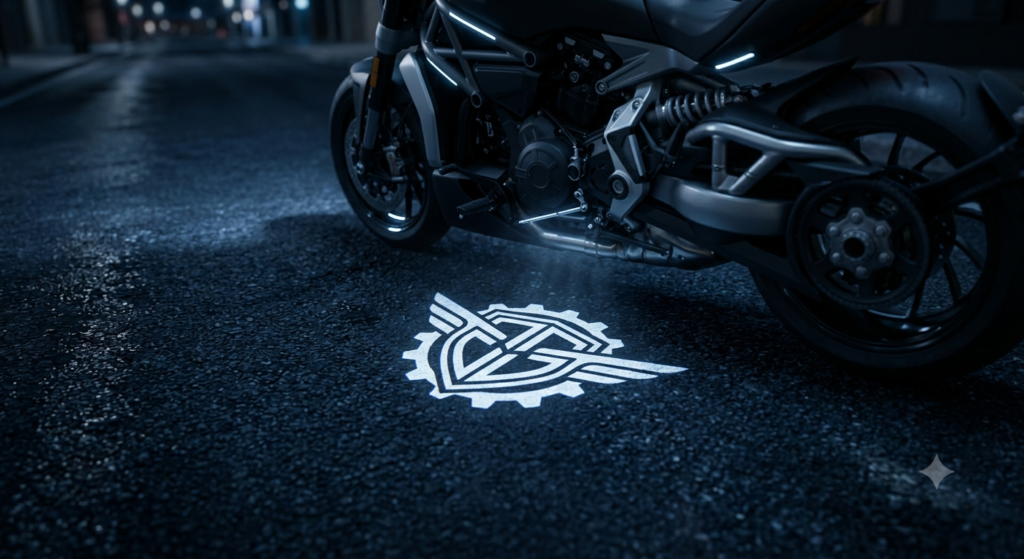
What Is a Motorcycle Ground Projection Light
A motorcycle ground projection light is a specialized lighting accessory mounted underneath or on the side of a motorcycle that projects a visible image, logo, or pattern onto the road surface, typically activated when the motorcycle is started, moving at low speed, or parked. It uses micro lens array (MLA) technology or similar optical projection systems to cast a sharp, focused image rather than a diffuse glow. Beyond aesthetics, a motorcycle ground projection light improves rider visibility to nearby vehicles and pedestrians, particularly in low-light conditions, making it both a styling feature and a practical safety accessory.
A motorcycle ground projection light is an LED-based optical accessory that projects a defined image, logo, or light pattern onto the ground beneath or beside a motorcycle. Unlike standard motorcycle lights that simply illuminate an area, a ground projection light uses precision optics, often a micro lens array or shaped lens system, to focus light into a sharp, recognizable shape on the pavement. It is commonly used for brand logos, warning patterns, or decorative designs, and serves both a visibility and styling purpose for riders and motorcycle manufacturers.
Introduction
If you have ever seen a motorcycle project a glowing logo or pattern onto the ground while parked or idling, you have likely encountered a motorcycle ground projection light. This increasingly popular accessory has moved from a niche aftermarket customization into a factory-installed feature on many premium motorcycle models, and understanding what a motorcycle ground projection light actually is helps riders, dealers, and manufacturers make more informed decisions about lighting upgrades.
Many riders assume a ground projection light is simply a decorative LED accessory, similar to underglow lighting kits. In reality, the technology behind a proper motorcycle ground projection light is far more sophisticated, relying on precision optical components to create a sharp, focused image rather than a blurry patch of light. This distinction matters both for visual quality and for the practical safety benefits the accessory can provide.
In this guide, we will explain exactly what a motorcycle ground projection light is, how it works, the optical technology behind it, the different types available, and why it has become a popular addition for both safety-conscious riders and motorcycle brands looking to reinforce their identity. By the end, you will have a complete understanding of this accessory and whether it makes sense for your motorcycle.
What Is a Motorcycle Ground Projection Light?
A motorcycle ground projection light is a compact lighting module, typically mounted under the engine, near the footpegs, or integrated into the fairing, that projects a focused image or pattern directly onto the road surface beneath or beside the motorcycle. Unlike standard ambient or underglow lighting, which simply casts a soft colored glow, a true ground projection light produces a crisp, clearly defined image, often a brand logo, warning symbol, or decorative pattern.
This effect is achieved through the use of precision optical lenses, most commonly a micro lens array, positioned in front of a high-intensity LED light source. The lens array shapes and focuses the emitted light so that it forms a sharp image on the ground rather than a scattered beam. This is what separates a genuine motorcycle ground projection light from simpler LED accent lighting products that lack proper optical focusing.
Motorcycle ground projection lights are typically activated automatically when the ignition is turned on, when the rider approaches with a smart key, or when the motorcycle is moving below a certain speed threshold, after which the projection often turns off automatically for safety once the motorcycle reaches normal riding speed.
What Is a Motorcycle Ground Projection Light Made Of? Core Components
Understanding what a motorcycle ground projection light is made of helps explain why quality varies so significantly between products. A properly engineered ground projection light generally consists of a high-output LED light source, a precision optical lens system such as a micro lens array or shaped projection lens, a housing designed for heat dissipation and weatherproofing, and an electronic control unit that manages activation timing and brightness.
The LED source provides the raw light output, but on its own would only produce a simple glow. The optical lens system is what transforms that raw light into a focused, recognizable image on the ground. This lens component is the most technically demanding part of the assembly, since it must accurately shape and direct light while withstanding vibration, temperature fluctuations, and outdoor exposure over the motorcycle’s lifespan.
How Does a Motorcycle Ground Projection Light Work?
At its core, a motorcycle ground projection light works by combining a concentrated LED light source with an optical lens designed to shape that light into a specific pattern. The LED emits light toward the lens assembly, which may use a micro lens array containing hundreds or thousands of tiny individual lenses working together to focus and project a clear image.
As the projected light exits the housing at an angle toward the ground, the lens geometry determines the final shape, size, and clarity of the projected image. Higher-quality motorcycle ground projection lights use precisely calculated lens curvature and coatings to minimize distortion, ensuring the logo or pattern appears sharp and undistorted even when viewed from different angles or projected onto slightly uneven pavement.
Most systems are also engineered with an automatic shut-off function tied to vehicle speed sensors, ensuring the projection light deactivates once the motorcycle exceeds a low-speed threshold, since a bright ground projection at highway speed would serve no functional purpose and could be distracting.
The Optical Technology Behind Motorcycle Ground Projection Lights
The defining technology in a quality motorcycle ground projection light is the micro lens array, often abbreviated as MLA. A micro lens array consists of a grid of extremely small individual lenses manufactured onto a single optical substrate. Each tiny lens contributes to focusing a portion of the LED’s light output, and together, the array produces a sharp, evenly illuminated projected image.
This approach differs significantly from simpler projection methods that rely on a single stencil or shaped aperture in front of an LED. Stencil-based systems tend to produce softer, less defined edges and lower overall brightness, while a properly engineered micro lens array produces a crisper, more professional-looking projection with better light efficiency.
Because of this, when evaluating what a motorcycle ground projection light is from a technical standpoint, the underlying optical design, particularly whether it uses genuine micro lens array technology, is one of the most important factors separating premium products from low-cost imitations.
Types of Motorcycle Ground Projection Lights
Motorcycle ground projection lights generally fall into a few common categories based on their purpose and design. Logo projection lights display a manufacturer or custom brand logo onto the ground, commonly used by motorcycle brands as a signature styling feature. Welcome light patterns activate briefly when the rider approaches or starts the motorcycle, creating a premium, high-tech first impression. Safety pattern projections cast warning shapes or illuminated zones around the motorcycle to increase visibility to nearby traffic and pedestrians in low-light conditions. Decorative and customizable projections allow riders to choose or even upload custom designs, patterns, or text for a personalized look.
Each type uses the same core optical projection technology, with differences mainly in the lens design, image content, and activation triggers programmed into the control unit.
Why Do Riders and Manufacturers Use Motorcycle Ground Projection Lights?
Beyond aesthetics, there are practical reasons a motorcycle ground projection light has become a valued accessory rather than just a novelty feature.
Visibility and Safety
One of the most cited benefits is improved visibility. When a motorcycle is parked, idling at a stop, or moving slowly through a dark area, a projected light pattern on the ground can make the vehicle more noticeable to drivers and pedestrians who might otherwise have difficulty spotting a smaller vehicle in low-light conditions. While it does not replace standard headlights or taillights, it can serve as a supplementary visibility cue, particularly in urban environments or dimly lit parking areas.
Brand Identity and Styling
For motorcycle manufacturers, a ground projection light offers a distinctive branding opportunity. Projecting a clear logo onto the pavement every time the motorcycle starts reinforces brand identity and adds a premium, tech-forward impression that appeals to riders who value both performance and design detail.
Rider Customization
Aftermarket ground projection light kits also appeal to riders who want to personalize their motorcycle. Custom patterns, text, or designs allow for a level of individuality that standard lighting accessories cannot offer.
What Is a Motorcycle Ground Projection Light Compared to Underglow Lighting?
It is worth clarifying what a motorcycle ground projection light is not, since it is often confused with underglow LED kits. Underglow lighting simply casts a diffuse, colored ambient glow beneath the motorcycle, with no defined shape or image. It typically uses standard LED strips without precision optics.
A true ground projection light, by contrast, uses focused optical lens technology to project a sharp, recognizable image or pattern rather than a soft glow. This distinction is important for buyers evaluating aftermarket lighting products, since some listings labeled as “projection lights” are actually simple underglow kits without genuine image-projecting optics.
How to Choose the Right Motorcycle Ground Projection Light
When selecting a motorcycle ground projection light, several factors matter beyond appearance alone. Optical quality should be a top consideration, since a light using genuine micro lens array technology will produce a noticeably sharper, brighter, and more defined image compared to lower-cost stencil-based alternatives. Weatherproofing and housing durability are also essential, since the unit will be exposed to road debris, moisture, and vibration during regular riding.
Mounting compatibility with your specific motorcycle model, along with the activation method, whether triggered by ignition, proximity key, or speed sensor, should also factor into the decision. Riders installing aftermarket units should confirm that the wiring and control system are compatible with their motorcycle’s electrical system, and where needed, consult a qualified motorcycle technician or the accessory manufacturer for proper installation guidance.
Common Applications of Motorcycle Ground Projection Lights
Motorcycle ground projection lights appear across a range of use cases beyond simple parking-lot styling. Premium touring and cruiser motorcycles often use logo projection as a signature startup sequence, where the brand emblem appears on the ground the moment the ignition or smart key is detected, creating a memorable welcome effect for the rider. Adventure and touring riders sometimes use ground projection systems paired with side-mounted units to increase visibility along the sides of the motorcycle when stopped on the shoulder of a road or in low-visibility rest areas.
Dealerships and motorcycle showrooms also use ground projection lighting as a display feature, projecting brand logos onto showroom floors to highlight specific models during customer presentations. Some fleet and delivery motorcycle operators have begun exploring ground projection lighting as a low-cost visibility enhancement for riders working night shifts in urban delivery environments, where added ground-level visibility can help alert pedestrians and other vehicles at intersections.
Installation Considerations for Motorcycle Ground Projection Lights
Installing a motorcycle ground projection light, whether as a factory feature or an aftermarket addition, involves a few important considerations that affect both performance and longevity. Mounting position matters significantly, since the unit needs a clear, unobstructed angle toward the ground without being positioned so low that it risks damage from road debris, speed bumps, or ground clearance issues during normal riding.
Wiring integration is another key factor. Aftermarket ground projection lights typically need to be connected to a switched power source, ignition signal, or in more advanced setups, a speed sensor input so the projection automatically deactivates once the motorcycle exceeds a safe low-speed threshold. Improper wiring can lead to the light remaining active at higher speeds, which is both a distraction and, in some regions, may not comply with local vehicle lighting regulations.
Because lighting regulations for aftermarket accessories vary by country and region, riders considering an aftermarket motorcycle ground projection light should confirm compliance with local traffic and vehicle equipment laws, and when in doubt, consult a qualified motorcycle technician or the accessory manufacturer before installation.
As this accessory continues to gain popularity across both premium and mid-range motorcycle segments, the gap between genuine optical projection systems built on precision lens technology and basic imitation lighting kits without true image-forming optics is becoming an increasingly important distinction for buyers, dealers, and manufacturers to understand before making a purchase or sourcing decision.
What Is a Motorcycle Ground Projection Light: A Growing Industry Trend
The demand for motorcycle ground projection lights has grown alongside broader trends in automotive and motorcycle lighting, where manufacturers increasingly use lighting as a form of brand expression rather than a purely functional element. As micro lens array manufacturing has become more precise and cost-effective, more motorcycle brands, from premium touring models to mid-range commuter bikes, have started incorporating ground projection lighting as either a standard or optional feature.
This growth has also expanded the aftermarket accessory space, giving riders more choices in optical quality, mounting style, and customization options. As with any growing accessory category, quality varies considerably between manufacturers, which makes understanding what a motorcycle ground projection light actually is, and what separates genuine optical projection systems from simpler imitation products, an increasingly valuable piece of knowledge for riders and buyers alike.
Conclusion
A motorcycle ground projection light is far more than a decorative accessory. It combines high-intensity LED lighting with precision optical technology, most notably micro lens array systems, to project a sharp, defined image or logo onto the road surface. Understanding what a motorcycle ground projection light is, and how the underlying optics differentiate premium products from basic underglow kits, helps riders and manufacturers choose the right accessory for both styling and safety purposes. As this technology continues to become more common across motorcycle brands, its dual role as both a visibility feature and a branding tool makes it a genuinely functional addition rather than a passing trend.
Frequently Asked Questions
What is a motorcycle ground projection light used for? It is used to project a logo, pattern, or design onto the ground beneath or beside a motorcycle, serving both a styling purpose and a supplementary visibility function in low-light conditions.
Does a motorcycle ground projection light improve safety? It can improve visibility to nearby drivers and pedestrians when the motorcycle is parked, idling, or moving slowly, though it is not a replacement for standard headlights and taillights.
What technology makes a motorcycle ground projection light work? Most quality units use a micro lens array combined with a high-intensity LED to focus light into a sharp, clearly defined projected image, rather than a simple diffuse glow.
Is a motorcycle ground projection light the same as underglow lighting? No, underglow lighting produces a soft ambient glow with no defined shape, while a true ground projection light uses precision optics to project a sharp, recognizable image or logo.
Can a motorcycle ground projection light be added as an aftermarket accessory? Yes, many aftermarket kits are available, but buyers should verify the unit uses genuine optical projection technology and confirm compatibility with their motorcycle’s mounting and electrical system before installation.
How long do motorcycle ground projection lights typically last? Quality units built with durable LED sources and weatherproof housings are generally designed to last for years of regular use, though lifespan depends heavily on build quality, exposure to moisture and road debris, and how well the unit is protected during installation.