
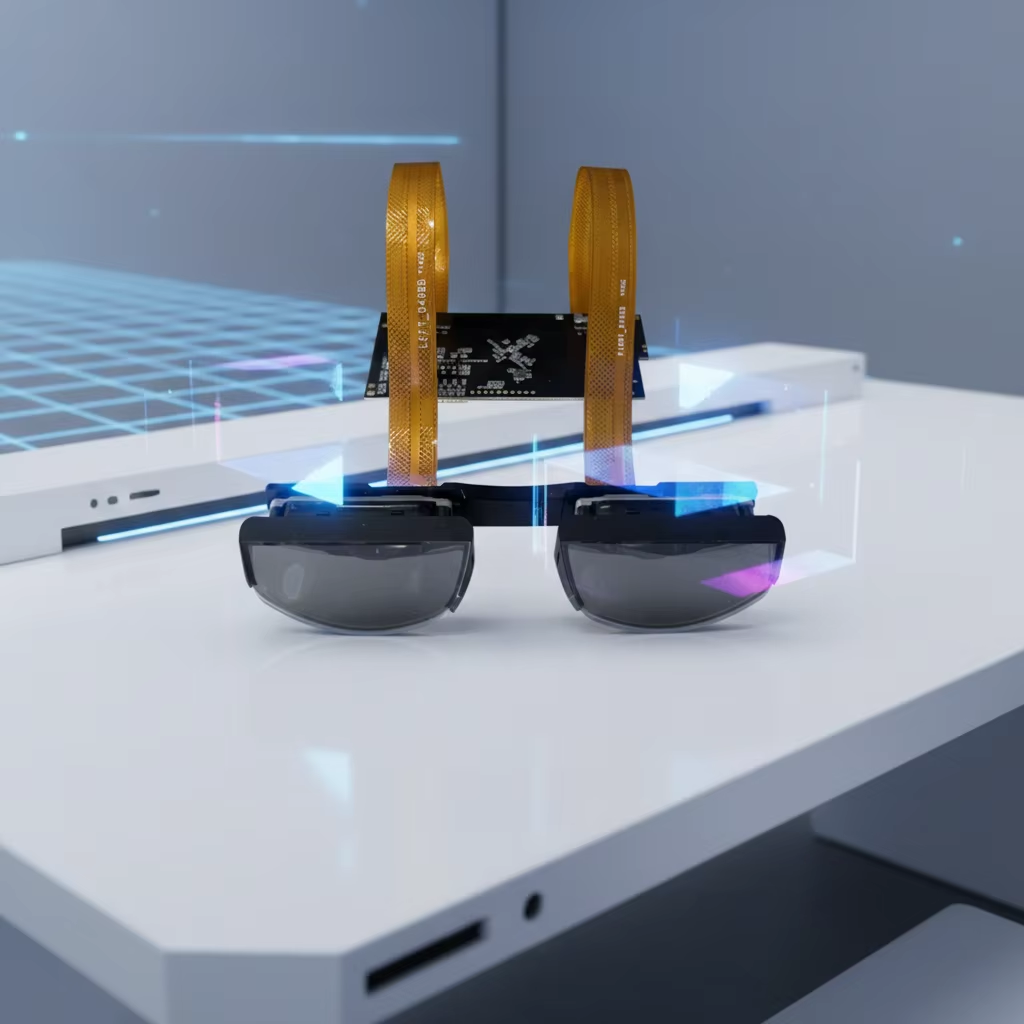
The rapid evolution of augmented reality (AR) devices has placed increasing demands on optical display technology. Modern AR headsets must deliver bright images, wide fields of view, compact form factors, and comfortable viewing experiences while remaining lightweight enough for extended use. Achieving this balance depends largely on the optical engine inside the device.
Among today’s most widely adopted near-eye display technologies, Birdbath optics vs Pancake optics have become two of the leading solutions. Each approach addresses different design challenges and is suitable for different applications, ranging from industrial smart glasses to medical visualization systems and consumer wearable devices.
Understanding the differences between these optical architectures is essential for product developers, OEM manufacturers, and engineers selecting components for their next-generation AR products.
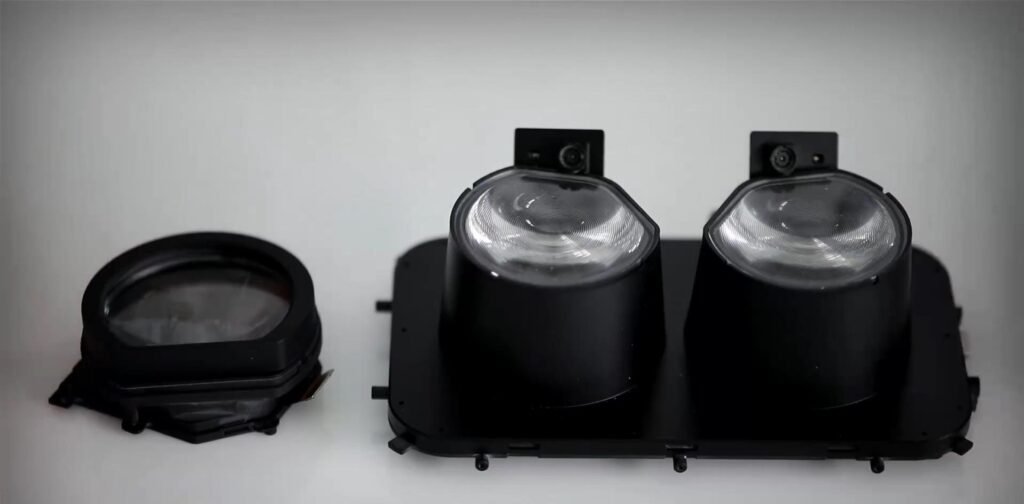
What Are Birdbath Optics?
Birdbath optics are one of the earliest commercially successful optical architectures used in augmented reality devices. The system typically combines a curved partially reflective mirror with beam splitter technology to project digital images into the user’s field of view while allowing visibility of the surrounding environment.
Light generated by a Micro OLED or Micro LCD display travels through several optical components before reaching the semi-reflective combiner positioned in front of the user’s eye. The carefully designed optical path enlarges the image while maintaining acceptable brightness and image quality.
Because the technology is relatively mature, Birdbath optical modules remain widely used in industrial AR devices, warehouse picking systems, medical visualization equipment, and enterprise smart glasses where reliability and manufacturing efficiency are priorities.
Understanding Pancake Optics
Pancake optics represent a newer generation of folded optical architecture designed to significantly reduce headset thickness without sacrificing image quality. Instead of relying primarily on large reflective elements, Pancake systems use multiple polarized reflections to fold the optical path inside a compact module.
This folded design allows manufacturers to shorten the physical distance between the display and the user’s eye while maintaining the required focal length. As a result, Pancake optical modules make it possible to develop thinner, lighter headsets with improved balance and wearing comfort.
Pancake optics have become increasingly popular in premium virtual reality and mixed reality headsets because they support compact industrial designs while delivering excellent image clarity.
Optical Design Differences
Although both technologies perform the same basic function, their internal optical paths are fundamentally different.
Birdbath optics utilize a relatively straightforward optical configuration consisting of reflective mirrors and beam splitters. The optical path is easier to manufacture and align, making production more efficient for high-volume applications.
Pancake optics employ multiple polarization layers, reflective films, and precision optical elements to repeatedly fold the light path within a confined space. This significantly reduces module thickness but requires tighter manufacturing tolerances and more sophisticated assembly processes.
The complexity of Pancake optics generally increases manufacturing requirements, but it also enables much more compact optical engines suitable for lightweight wearable devices.
Image Quality Comparison
Image quality is one of the most important considerations when selecting an optical module.
Birdbath optics are capable of delivering bright, sharp images with good color reproduction. Their relatively simple optical path minimizes certain alignment challenges, making them an attractive choice for many industrial applications.
Pancake optics, however, often provide superior edge-to-edge clarity and reduced optical distortion when carefully engineered. The shorter optical path and improved lens design contribute to higher perceived image quality in premium wearable products.
The final performance of either technology ultimately depends on display resolution, lens quality, coating technologies, optical calibration, and manufacturing precision rather than optical architecture alone.
Size and Weight Considerations
As consumer demand shifts toward lighter wearable devices, physical size has become a major factor in optical module selection.
Birdbath systems generally require larger optical components, resulting in slightly bulkier headsets. While this may not present significant challenges for industrial equipment, it can affect user comfort during prolonged daily use.
Pancake optics were specifically developed to reduce overall headset thickness. By folding the optical path multiple times, manufacturers can create slimmer products with improved weight distribution and enhanced ergonomics.
For next-generation consumer AR and mixed reality devices, compactness has become one of Pancake optics’ greatest advantages.
Manufacturing Complexity
From a production perspective, Birdbath optical modules are generally easier to manufacture. Their simpler optical structure allows efficient assembly while maintaining stable production yields.
Pancake optics require significantly greater manufacturing precision. Multiple optical coatings, polarization elements, and alignment procedures must be carefully controlled to maintain image quality throughout mass production.
For OEM manufacturers producing large quantities of AR optical modules, engineering expertise and advanced manufacturing capabilities become essential for maintaining consistent product quality.
Choosing the Right Solution
There is no universal answer to whether Birdbath or Pancake optics are better. The ideal solution depends on the intended application.
Industrial smart glasses often prioritize reliability, brightness, and cost-effective manufacturing, making Birdbath optics a practical choice. Consumer electronics manufacturers, meanwhile, frequently emphasize compact design, lightweight construction, and premium visual experiences, areas where Pancake optics offer clear advantages.
Medical visualization systems, defense equipment, and enterprise wearable devices may evaluate additional factors such as optical efficiency, environmental durability, integration flexibility, and long-term reliability before selecting an optical architecture.
Rather than focusing solely on technology trends, manufacturers should evaluate the complete system requirements and product objectives before making a decision.
Future Trends in Near-Eye Display Optics
The future of AR optical technology continues to evolve rapidly. Advances in Micro OLED displays, freeform optics, waveguide technologies, and advanced optical coatings are driving the development of lighter, brighter, and more energy-efficient wearable devices.
Both Birdbath and Pancake optics are expected to remain important across different market segments, while emerging technologies such as optical waveguides and holographic combiners continue to mature for future consumer products.
Manufacturers capable of providing customized optical design, precision coating, lens assembly, and complete optical module development will play an increasingly important role as AR hardware adoption accelerates across industrial and commercial markets.
Frequently Asked Questions
What are Birdbath optics used for?
Birdbath optics are commonly used in industrial AR glasses, medical visualization devices, enterprise smart glasses, and other near-eye display systems where brightness, reliability, and cost-effective manufacturing are important.
Why are Pancake optics becoming popular?
Pancake optics enable thinner, lighter headset designs by folding the optical path, making them well suited for premium AR, VR, and mixed reality devices.
Which optical system provides better image quality?
Both technologies can deliver excellent performance. Overall image quality depends on optical design, display technology, coatings, manufacturing precision, and calibration rather than the optical architecture alone.
Are Pancake optics more difficult to manufacture?
Yes. Pancake optical modules typically require more complex assembly processes, tighter alignment tolerances, and advanced optical coating technologies compared with Birdbath optics.
Can Birdbath optics vs Pancake optics both use Micro OLED displays?
Yes. Both optical architectures are compatible with Micro OLED display technology, although the final optical design depends on the product’s performance requirements and intended application.
Conclusion
Selecting between Birdbath optics and Pancake optics requires balancing optical performance, manufacturing complexity, product size, and application requirements. Birdbath optics continue to provide a dependable and cost-effective solution for industrial and enterprise AR devices, while Pancake optics enable the compact, lightweight designs increasingly demanded in premium consumer wearables.
As AR hardware continues to evolve, manufacturers that combine advanced optical engineering, precision coating technologies, Micro OLED integration, and scalable production capabilities will be well positioned to support the next generation of near-eye display systems. For OEMs and product developers, choosing the right optical architecture early in the design process is a critical step toward building reliable, high-performance AR devices.